
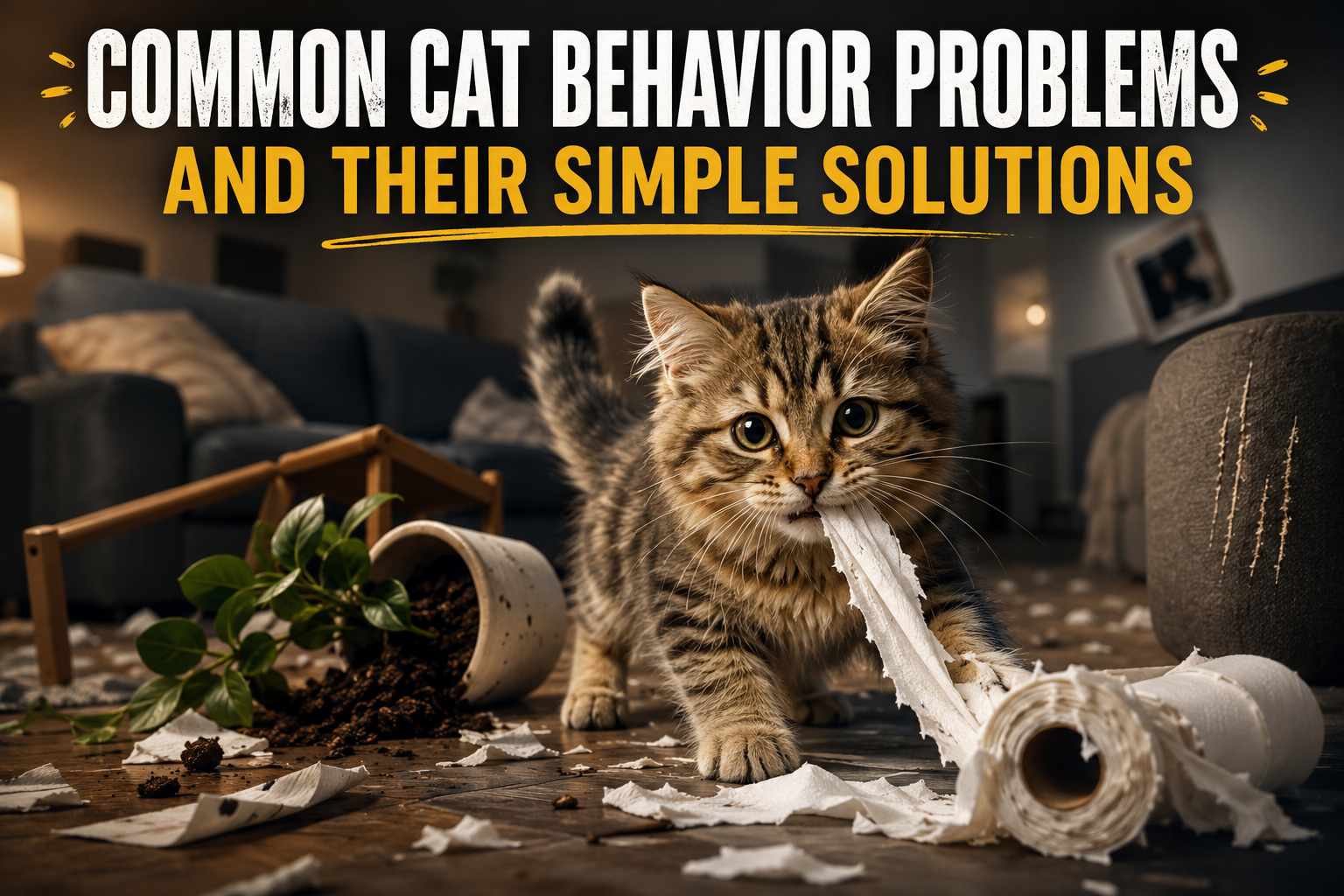
Cats are intelligent, curious, and independent animals, but even the most lovable feline can develop behavior issues that challenge their owners. Understanding cat behavior problems is the first step toward creating a peaceful and happy home. Many unwanted behaviors are not signs of a “bad” cat. Instead, they are often natural responses to boredom, stress, lack of training, or unmet needs.
This cat behavior guide explores common issues and provides practical cat behavior solutions that can help improve your pet’s habits.
Understanding Cat Behavior
Before trying to correct unwanted actions, it is important to focus on understanding cat behavior. Cats communicate through body language, vocalizations, scratching, and other actions. What humans may see as misbehavior is often a cat expressing its instincts.
For example, scratching helps maintain healthy claws, while meowing is a form of communication. By understanding why a cat behaves a certain way, owners can find effective solutions rather than simply punishing the animal.
Stop Cat Scratching Furniture
One of the most common indoor cat behavior issues is scratching furniture. Cats scratch to stretch their muscles, mark territory, and maintain their claws.
Solutions:
- Provide sturdy scratching posts in different areas of your home.
- Place scratching posts near furniture your cat frequently targets.
- Reward your cat with treats when it uses the scratching post.
- Use furniture protectors or cat-safe deterrent sprays.
If you want to stop cat scratching furniture, consistency is key. Redirect your cat toward acceptable scratching surfaces rather than punishing it.
Cat Biting Problems
Cat biting problems can occur during play, due to fear, or because of overstimulation. Kittens often bite while learning social skills, while adult cats may bite if they feel threatened.
Solutions:
- Avoid using your hands as toys.
- Provide interactive toys for hunting and chasing activities.
- End play sessions immediately if biting occurs.
- Watch for signs of overstimulation, such as tail flicking or flattened ears.
Teaching appropriate play behavior is an important part of how to train a cat successfully.
Excessive Meowing in Cats
While vocalization is normal, excessive meowing in cats can become frustrating. Some cats meow for attention, food, boredom, or because of stress.
Solutions:
- Ensure your cat has enough food, water, and mental stimulation.
- Avoid rewarding constant meowing with immediate attention.
- Establish a regular feeding schedule.
- Spend quality time playing with your cat daily.
If excessive meowing appears suddenly, consider consulting a veterinarian to rule out health concerns.
Naughty Cat Behavior and Hyperactivity
Many owners struggle with naughty cat behavior, including jumping on counters, knocking objects over, or running around the house at night. In many cases, these behaviors result from boredom and excess energy.
How to Calm a Hyperactive Cat
If you are wondering how to calm a hyperactive cat, try these strategies:
- Schedule daily play sessions using wand toys and balls.
- Provide climbing structures such as cat trees.
- Rotate toys regularly to prevent boredom.
- Create window perches for bird watching.
- Feed meals through puzzle feeders.
A mentally stimulated cat is less likely to develop destructive habits.
Common Cat Habits That Owners Misunderstand
Many common cat habits are perfectly natural, even if they seem strange.
Kneading
Cats often knead blankets or soft surfaces because it reminds them of kittenhood and provides comfort.
Bringing “Gifts”
Some cats bring insects or small prey to their owners. This behavior is linked to natural hunting instincts.
Hiding
Cats may hide when stressed, frightened, or adjusting to a new environment. Providing safe spaces helps them feel secure.
Recognizing these behaviors as normal can reduce unnecessary concern and improve the relationship between owner and pet.
How to Train a Cat Effectively
Many people believe cats cannot be trained, but that is a myth. Learning how to train a cat involves patience, consistency, and positive reinforcement.
Cat Training Tips
Here are some useful cat training tips:
- Reward desired behavior with treats and praise.
- Keep training sessions short and enjoyable.
- Use clicker training for faster learning.
- Never use physical punishment.
- Be consistent with household rules.
Positive reinforcement encourages good habits while strengthening trust between you and your cat.
Cat Discipline Methods That Actually Work
When addressing unwanted behavior, humane cat discipline methods are far more effective than punishment.
Recommended Methods:
- Redirect unwanted behavior toward acceptable alternatives.
- Remove rewards associated with bad behavior.
- Ignore attention-seeking behaviors when appropriate.
- Use environmental management, such as closing doors or securing fragile items.
Harsh punishment can create fear and anxiety, making behavior problems worse.
Fixing Bad Cat Behavior Long-Term
Fixing bad cat behavior requires patience and understanding. Most issues cannot be solved overnight. Instead, owners should focus on identifying the cause of the behavior and providing appropriate solutions.
Successful behavior correction often includes:
- Daily exercise and enrichment.
- Consistent routines.
- Positive reinforcement training.
- Proper environmental setup.
- Regular veterinary checkups.
Conclusion
Most cat behavior problems have simple and effective solutions when owners take the time to understand their pet’s needs. Whether you are dealing with scratching, biting, excessive vocalization, or hyperactivity, the right approach can make a significant difference. By following proven cat behavior solutions, applying helpful cat training tips, and focusing on understanding cat behavior, you can build a stronger bond with your feline companion and enjoy a calmer, happier home.