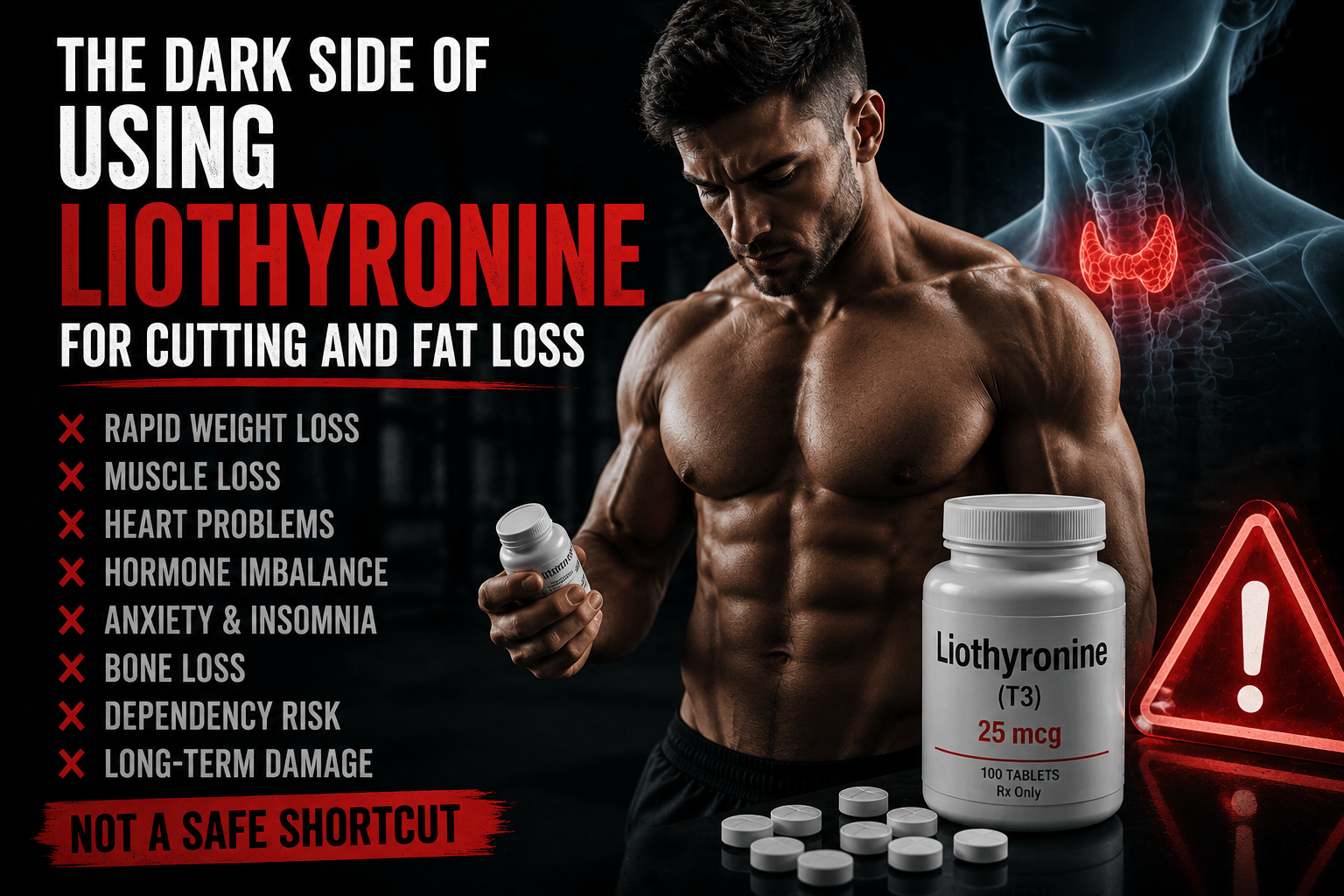
In the pursuit of a leaner physique, many fitness enthusiasts are constantly searching for ways to accelerate fat loss. Among the substances often discussed in bodybuilding and weight-loss circles is Liothyronine, a synthetic form of the thyroid hormone T3. While some individuals use it in hopes of achieving faster results during cutting phases, the reality is far more complex—and potentially dangerous.
Before considering this hormone, it is essential to understand the Liothyronine side effects, Liothyronine fat loss risks, and the long-term consequences that can affect both physical performance and overall health.
What Is Liothyronine?
Liothyronine is a prescription medication that contains synthetic T3 thyroid hormone, a hormone naturally produced by the thyroid gland. It is primarily prescribed to treat hypothyroidism, a condition where the thyroid does not produce enough hormones.
Since thyroid hormones regulate metabolism, some bodybuilders and dieters have become interested in Liothyronine as a potential fat-burning aid. However, using a prescription hormone without a medical need can expose the body to serious health complications.
Why Do Bodybuilders Use Liothyronine?
The appeal is simple: T3 increases metabolic activity, which can lead to faster calorie burning. During a cutting phase, some athletes believe that Liothyronine can help them achieve a lower body-fat percentage more quickly.
Unfortunately, this approach ignores the significant Liothyronine bodybuilding dangers associated with altering hormone levels artificially. Fat loss may occur, but the price can be much higher than expected.
Liothyronine Fat Loss Risks
Many people view Liothyronine as a shortcut to a lean physique. However, there are substantial Liothyronine fat loss risks that are often overlooked.
These risks include:
- Excessive metabolic stress
- Increased strain on the cardiovascular system
- Hormonal disruptions
- Loss of muscle mass
- Long-term thyroid dysfunction
While weight may decrease rapidly, not all of the lost weight comes from body fat. In many cases, muscle tissue is also broken down, which can negatively impact strength and athletic performance.
Liothyronine Side Effects You Should Know
One of the biggest concerns surrounding this hormone is the wide range of Liothyronine side effects that users may experience.
Common side effects include:
- Rapid heartbeat
- Heart palpitations
- Excessive sweating
- Anxiety
- Nervousness
- Insomnia
- Tremors
- Increased blood pressure
- Fatigue
- Headaches
The severity of these effects often increases when individuals take higher doses than medically prescribed.
Liothyronine Heart Problems
Perhaps the most concerning issue is the increased risk of Liothyronine heart problems.
Because T3 directly influences heart function, excessive levels can force the heart to work harder than normal. This can lead to:
- Irregular heart rhythms
- Elevated heart rate
- Increased blood pressure
- Chest discomfort
- Greater cardiovascular stress
For individuals with existing heart conditions, the dangers may be even greater. Even healthy users can experience unexpected cardiac complications when hormone levels become unbalanced.
Liothyronine Hormone Imbalance
The human endocrine system relies on a delicate balance of hormones. Introducing synthetic T3 can disrupt this balance and create a significant Liothyronine hormone imbalance.
When the body receives external thyroid hormone, it may reduce its own natural hormone production. Over time, this can interfere with normal thyroid function and create dependency on hormone supplementation.
Symptoms of hormonal imbalance may include:
- Mood swings
- Fatigue
- Irritability
- Energy crashes
- Reduced concentration
- Metabolic instability
Liothyronine Muscle Loss: The Hidden Cost
Many people assume that rapid weight loss means successful fat loss. However, Liothyronine muscle loss is a major concern that is rarely discussed.
When metabolism becomes excessively elevated, the body may break down muscle tissue for energy. This can result in:
- Reduced strength
- Decreased athletic performance
- Slower recovery
- Loss of lean muscle mass
For bodybuilders and fitness enthusiasts who have spent years building muscle, this consequence can be especially frustrating.
Is Liothyronine Safe for Fat Loss?
A common question is: Is Liothyronine safe for fat loss?
For individuals who have a diagnosed thyroid disorder and are using the medication under medical supervision, Liothyronine can be safe and effective.
However, for healthy individuals seeking cosmetic weight loss or bodybuilding advantages, the answer is far less reassuring. Medical experts generally do not recommend using prescription thyroid hormones solely for fat loss because the risks often outweigh the potential benefits.
Liothyronine Cutting Cycle Risks
Online forums frequently discuss Liothyronine cutting cycle risks, yet many users underestimate them.
Potential risks include:
- Thyroid suppression
- Severe fatigue after discontinuation
- Hormonal instability
- Muscle wasting
- Cardiovascular complications
Some users report temporary improvements in body composition, only to experience significant health challenges afterward.
T3 Thyroid Hormone Abuse in Fitness
The growing popularity of performance-enhancing substances has contributed to instances of T3 thyroid hormone abuse.
Hormone abuse occurs when individuals use medications without medical necessity or exceed recommended doses. This practice can place enormous stress on the body and may lead to lasting health consequences.
Unlike proper medical treatment, unsupervised hormone use lacks professional monitoring, making complications more likely.
Liothyronine Fitness Risks
The overall Liothyronine fitness risks extend beyond simple side effects.
Athletes may experience:
- Reduced recovery capacity
- Increased risk of overtraining
- Hormonal dysfunction
- Sleep disturbances
- Lower long-term performance
A temporary reduction in body fat is rarely worth sacrificing long-term health and fitness progress.
Liothyronine Long-Term Effects
The potential Liothyronine long-term effects deserve serious attention.
Extended misuse may contribute to:
- Chronic thyroid dysfunction
- Persistent cardiovascular strain
- Bone density reduction
- Hormonal disturbances
- Ongoing metabolic issues
Some individuals may require medical intervention to restore normal thyroid function after prolonged misuse.
Liothyronine Health Dangers: The Bigger Picture
The most important message is that Liothyronine health dangers are not limited to one organ or system. The medication can affect the heart, muscles, metabolism, hormones, and overall well-being.
Many fitness trends promote rapid results, but sustainable fat loss comes from:
- Balanced nutrition
- Consistent training
- Adequate sleep
- Stress management
- Long-term discipline
These methods may take longer, but they do not carry the same risks associated with hormone manipulation.
Final Thoughts
The promise of rapid fat loss can be tempting, especially during a cutting phase. However, the reality behind Liothyronine for cutting and fat loss is far less glamorous than many online discussions suggest. From Liothyronine side effects and Liothyronine heart problems to Liothyronine muscle loss, Liothyronine hormone imbalance, and serious Liothyronine long-term effects, the risks are significant.
Before considering any thyroid hormone for weight loss, remember that there is no shortcut more valuable than your health. A lean physique achieved through safe, sustainable habits will always be a better investment than risking the potentially severe consequences of Liothyronine bodybuilding warning signs that many people ignore.