Ecstasy, also known as MDMA (3,4-methylenedioxymethamphetamine), is a synthetic psychoactive drug often associated with parties, music festivals, and nightlife culture. Many users seek the temporary feelings of euphoria, emotional closeness, and increased energy that the drug can produce. However, behind these short-lived effects lies a range of serious health concerns that can impact both the cardiovascular system and sexual health. Understanding the Ecstasy Effects on Heart and Sexual Health is essential for making informed decisions and protecting long-term well-being.
What Is Ecstasy and How Does It Work?
Ecstasy affects the brain by increasing the release of neurotransmitters such as serotonin, dopamine, and norepinephrine. These chemicals influence mood, pleasure, energy levels, and emotional responses. While this surge may create feelings of happiness and confidence, it also places significant stress on various organs, including the heart.
The drug’s stimulant properties can force the body to work harder than normal, leading to dangerous physiological changes. Repeated use may increase the risk of long-term health complications.
Ecstasy Effects on Heart Health
One of the most concerning aspects of ecstasy use is its impact on the cardiovascular system. Even a single dose can place unusual strain on the heart.
Increased Heart Rate
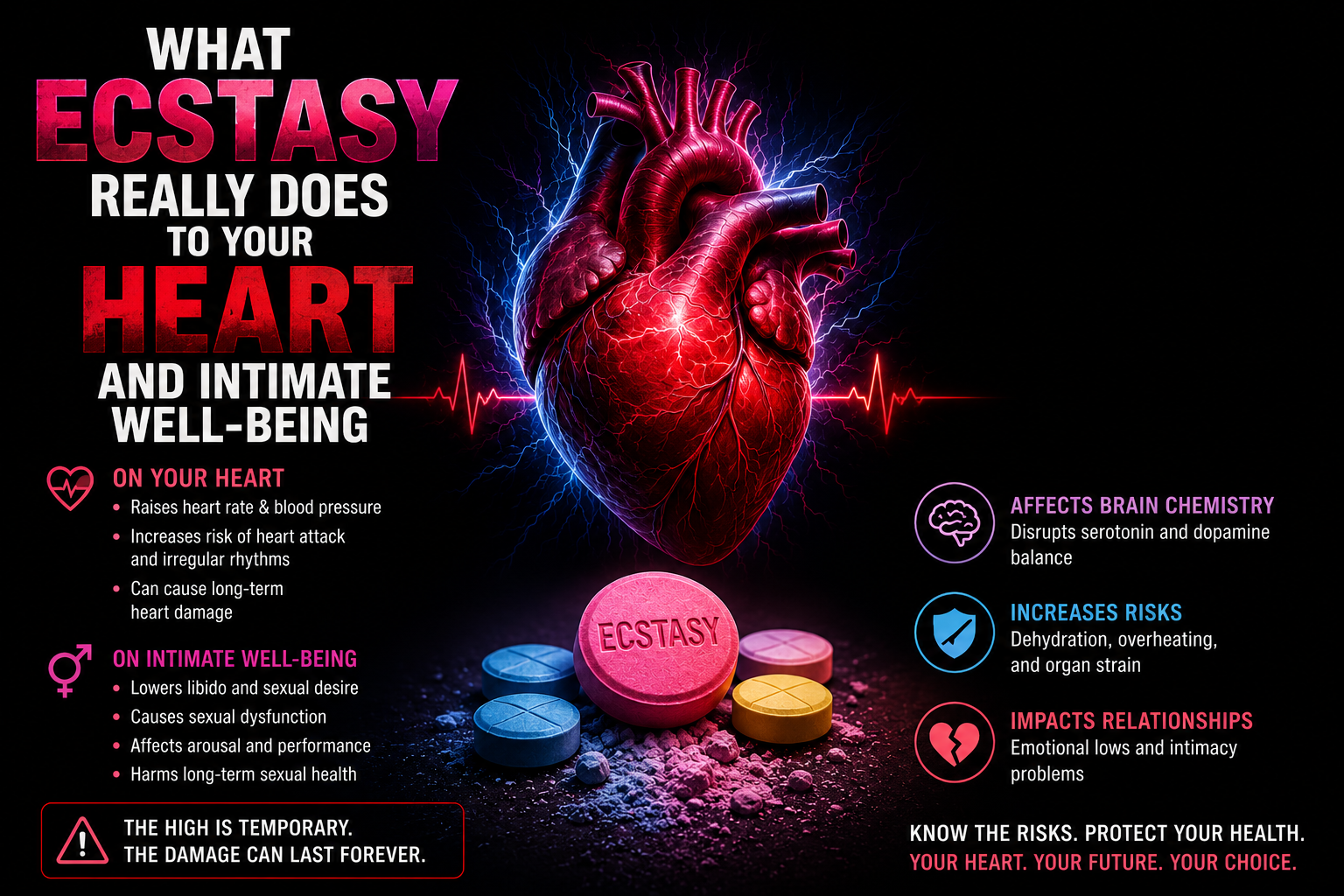
Ecstasy stimulates the nervous system, causing the heart to beat faster. This elevated heart rate can remain for several hours, forcing the heart to work harder than usual. For individuals with underlying heart conditions, this can be particularly dangerous.
Elevated Blood Pressure
The drug often causes blood vessels to constrict, resulting in higher blood pressure levels. Increased blood pressure can raise the risk of cardiovascular complications, especially in individuals who already have hypertension.
Irregular Heart Rhythms
Some users experience abnormal heart rhythms, known as arrhythmias. These irregular beats can reduce the heart’s ability to pump blood efficiently and may increase the risk of severe medical emergencies.
Increased Risk of Heart Attack
Although heart attacks are commonly associated with older adults, ecstasy use has been linked to heart attacks in younger individuals as well. The combination of increased heart rate, elevated blood pressure, dehydration, and physical exertion can create a dangerous situation.
Long-Term Cardiovascular Damage
Repeated use of ecstasy may contribute to chronic cardiovascular stress. Over time, persistent strain on the heart and blood vessels can increase the likelihood of developing long-term heart-related health issues.
How Ecstasy Affects Sexual Health
Many people mistakenly believe that ecstasy enhances sexual experiences. While some users report temporary feelings of emotional connection or increased sensitivity, the reality is often more complex.
Reduced Sexual Performance
Ecstasy can interfere with normal sexual function. Some users experience difficulty maintaining arousal or achieving satisfactory sexual performance despite feeling emotionally connected.
Changes in Libido
The drug may temporarily increase feelings of attraction or intimacy, but long-term use can negatively affect sexual desire. Changes in brain chemistry can disrupt the natural balance of hormones and neurotransmitters involved in sexual function.
Difficulty Achieving Orgasm
Some individuals report challenges reaching orgasm after taking ecstasy. This effect is often linked to alterations in serotonin levels, which play a role in sexual response.
Emotional Consequences
Healthy intimacy depends on emotional stability and communication. Because ecstasy can affect mood and emotional regulation, users may experience emotional lows, anxiety, or depression after the drug wears off. These effects can negatively impact relationships and overall sexual well-being.
Additional Health Risks Associated With Ecstasy
The dangers of ecstasy extend beyond the heart and sexual health.
Dehydration and Overheating
Ecstasy can increase body temperature and reduce the body’s ability to regulate heat. In crowded environments such as clubs or festivals, this may lead to severe dehydration and heat-related illnesses.
Sleep Disturbances
Many users experience difficulty sleeping after taking ecstasy. Lack of quality sleep can affect physical recovery, mental health, and overall wellness.
Anxiety and Depression
Following the temporary high, users often experience a significant drop in serotonin levels. This can contribute to feelings of sadness, irritability, anxiety, and fatigue.
Cognitive Problems
Frequent use has been associated with memory difficulties, concentration problems, and impaired decision-making abilities.
Warning Signs That Require Medical Attention
Immediate medical assistance should be sought if a person experiences:
- Chest pain
- Severe shortness of breath
- Extremely rapid heartbeat
- Fainting or loss of consciousness
- High body temperature
- Seizures
- Severe confusion or panic
Prompt treatment can prevent serious complications and potentially save lives.
Safer and Healthier Alternatives
Individuals seeking improved mood, stronger relationships, or greater confidence can benefit from healthier alternatives that do not carry the same risks as ecstasy.
Regular Physical Activity
Exercise naturally increases the production of endorphins and other mood-enhancing chemicals. It can improve cardiovascular health, reduce stress, and support sexual wellness.
Strong Social Connections
Building meaningful friendships and maintaining healthy relationships can provide emotional fulfillment without relying on substances.
Mindfulness and Meditation
Stress management techniques such as meditation, breathing exercises, and mindfulness can improve emotional well-being and mental resilience.
Healthy Nutrition
A balanced diet supports both heart health and hormone regulation. Proper nutrition can contribute to higher energy levels and improved overall wellness.
Professional Support
Individuals struggling with substance use or emotional challenges should consider seeking help from healthcare professionals, counselors, or support groups.
Final Thoughts
The Ecstasy Effects on Heart and Sexual Health are often underestimated by users who focus only on the drug’s temporary pleasurable effects. While ecstasy may create short-lived feelings of euphoria and emotional closeness, it can also place significant stress on the heart, disrupt sexual function, and contribute to long-term physical and emotional health problems. Understanding these risks is an important step toward making safer choices. By prioritizing healthy lifestyle habits, strong relationships, and professional support when needed, individuals can protect both their cardiovascular health and their overall quality of life.