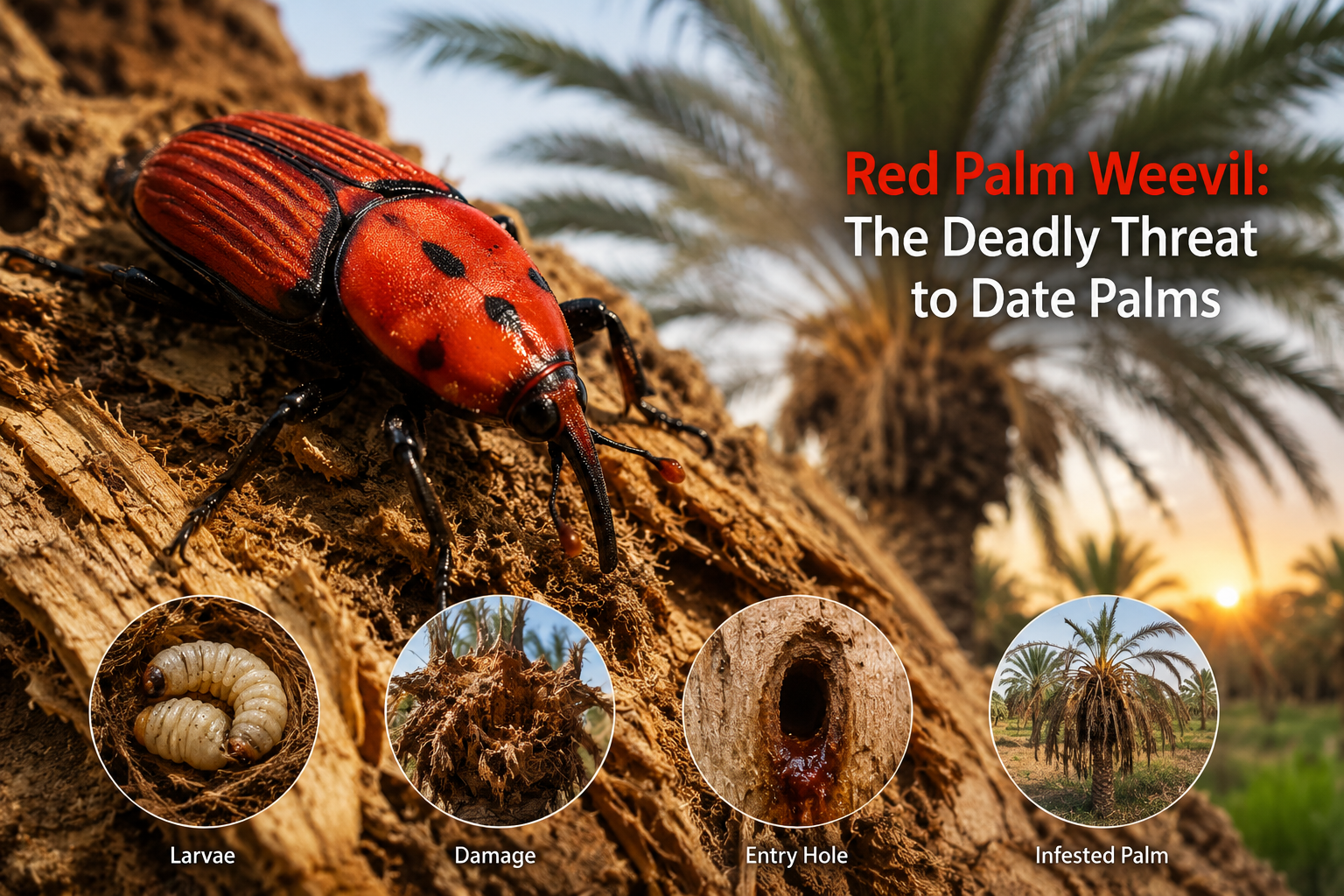
The Red Palm Weevil is one of the most destructive pests affecting palm trees worldwide. Known scientifically as Rhynchophorus ferrugineus, this invasive insect has caused severe damage to date palm plantations, ornamental palms, and coconut palms across Asia, the Middle East, Africa, and parts of Europe. Farmers and agricultural experts consider the Red Palm Weevil a major threat because infestations often remain hidden until significant damage has already occurred.
What Is the Red Palm Weevil?
The Red Palm Weevil is a large reddish-brown beetle that can grow between 2 and 5 centimeters in length. While the adult insect is visible on the outside of a tree, the real danger comes from its larvae. These larvae tunnel deep inside palm trunks and feed on soft tissues, gradually weakening the tree from within.
Female weevils can lay hundreds of eggs during their lifetime. These eggs are usually deposited in wounds, cracks, or soft areas of palm trees. Once the eggs hatch, the larvae begin feeding immediately, creating extensive tunnels inside the trunk.
The Life Cycle of the Red Palm Weevil
Understanding the life cycle of the Red Palm Weevil is essential for effective control.
Egg Stage
Female weevils lay eggs in small holes or wounds on the palm tree. A single female may lay between 200 and 300 eggs.
Larval Stage
After hatching, larvae begin feeding on the inner tissues of the tree. This stage is the most destructive and can last several weeks or even months. During this period, larvae create large galleries and tunnels inside the trunk.
Pupal Stage
When fully grown, larvae form cocoons made from palm fibers. Inside these protective structures, they transform into adult beetles.
Adult Stage
Adult weevils emerge from the cocoon and search for new palm trees to infest. They can fly considerable distances, helping the infestation spread rapidly.
Why Is the Red Palm Weevil So Dangerous?
The Red Palm Weevil is particularly dangerous because it attacks the interior of the tree. Unlike many pests that damage leaves or external surfaces, this insect destroys the structural tissues responsible for transporting water and nutrients.
By the time external symptoms become visible, the infestation is often advanced. In many cases, heavily infested trees cannot be saved and must be removed to prevent the pest from spreading.
Signs and Symptoms of Infestation
Early detection is critical. Farmers and palm tree owners should watch for the following warning signs:
- Small holes in the trunk.
- Brown or reddish fluid leaking from the tree.
- Chewed plant fibers around entry holes.
- Unpleasant fermentation odors.
- Yellowing or wilting fronds.
- Drooping crown leaves.
- Weakening of the trunk structure.
- Presence of adult weevils near the tree.
In severe cases, the entire crown of the palm may collapse, leading to the death of the tree.
Palm Tree Species at Risk
Although the Red Palm Weevil can attack various palm species, some are particularly vulnerable:
- Date palms (Phoenix dactylifera)
- Canary Island date palms
- Coconut palms
- Oil palms
- Ornamental palms
Date palms are among the most economically important hosts, making the pest a significant threat to agricultural production in many countries.
Economic Impact
The economic consequences of Red Palm Weevil infestations are substantial. Millions of dollars are spent annually on monitoring, treatment, tree removal, and replacement programs.
For countries that rely heavily on date palm cultivation, the pest poses a direct threat to food production, rural livelihoods, and export revenues. Entire plantations have been affected in regions where infestations were not detected early enough.
How the Pest Spreads
The Red Palm Weevil spreads through several mechanisms:
Natural Flight
Adult beetles are strong fliers and can travel several kilometers in search of suitable host trees.
Movement of Infected Plants
Transporting infested palm trees is one of the fastest ways the pest spreads to new areas.
Poor Agricultural Practices
Unprotected pruning wounds and damaged trunks provide ideal entry points for female weevils to lay eggs.
Prevention Strategies
Preventing infestations is often more effective than treating established populations.
Regular Inspection
Frequent monitoring helps identify infestations during the early stages.
Proper Pruning
Pruning should be performed carefully, and wounds should be treated or protected to prevent egg-laying.
Sanitation
Dead or heavily infested palms should be removed promptly.
Quarantine Measures
Strict controls on the movement of palm trees help prevent the introduction of the pest into new regions.
Methods of Control
Chemical Control
Insecticides can be applied through spraying, trunk injection, or soil treatment. Proper application is essential for effectiveness.
Biological Control
Researchers are exploring natural enemies such as fungi, nematodes, and beneficial insects to reduce weevil populations.
Pheromone Traps
Pheromone traps attract adult weevils and are widely used for monitoring and population control.
Tree Injection Techniques
Specialized injections deliver treatments directly into the trunk where larvae are feeding.
Challenges in Eradication
Completely eliminating the Red Palm Weevil is difficult because:
- Infestations often remain hidden.
- Adult beetles can fly long distances.
- Large numbers of eggs are produced.
- Early symptoms are difficult to detect.
As a result, integrated pest management programs combining multiple control methods are considered the most effective approach.
Future Research and Innovations
Scientists continue to develop advanced detection technologies, including acoustic sensors that can detect larval feeding sounds inside palm trunks. Artificial intelligence, drones, and remote monitoring systems are also being tested to improve early detection and response efforts.
These innovations may help reduce losses and improve the protection of valuable palm plantations in the future.
Conclusion
The Red Palm Weevil remains one of the most serious threats to palm trees worldwide. Its ability to hide inside trunks, reproduce rapidly, and spread over large distances makes it a formidable agricultural pest. Early detection, regular monitoring, proper sanitation, and integrated management strategies are essential for protecting palm trees from this destructive insect. By understanding the risks and warning signs associated with the Red Palm Weevil, farmers and property owners can take proactive steps to safeguard their palms and prevent devastating losses.