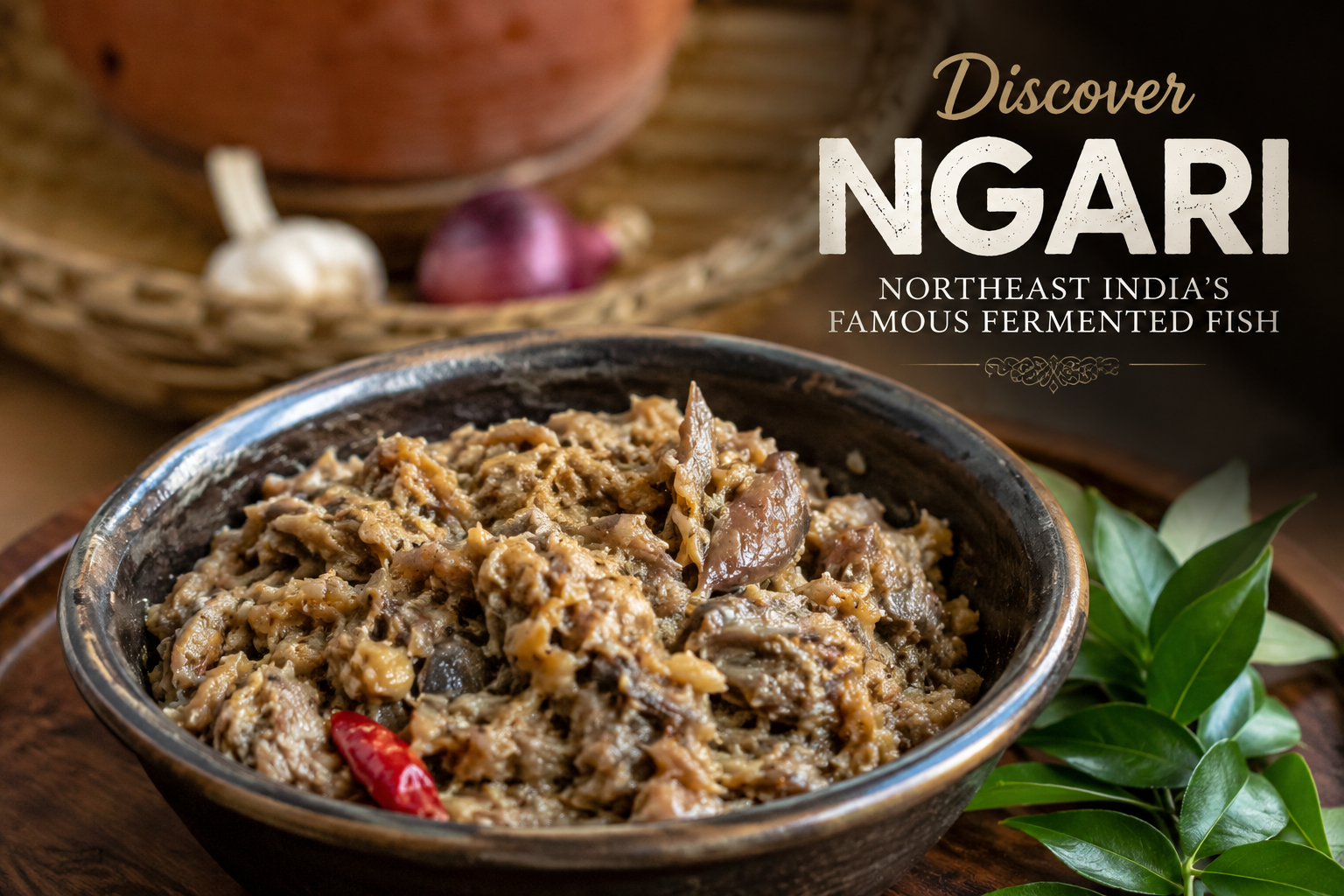
Ngari Fermented Fish is one of the most distinctive traditional foods of Northeast India. Deeply rooted in the culture of Manipur, Ngari has been a staple ingredient in Manipuri cuisine for centuries. Known for its strong aroma, unique flavor, and cultural significance, this fermented fish product is often compared to other famous fermented seafood delicacies found across Asia.
While some people may find its smell overwhelming at first, Ngari remains an essential ingredient in many traditional dishes and is highly valued by local communities. Beyond its culinary role, it also represents a rich food heritage that has been passed down through generations.
What Is Ngari Fermented Fish?
Ngari is a traditional fermented fish product made primarily from freshwater fish. It is produced through a natural fermentation process that can take several months or even years. Unlike dried fish, Ngari undergoes controlled fermentation, which transforms its flavor, texture, and aroma.
The final product develops a rich umami taste that enhances many local recipes. Because of its intense flavor, a small amount of Ngari is often enough to season an entire dish.
In Manipur, Ngari is not merely an ingredient but an important part of everyday life and cultural identity.
The History of Ngari
The history of Ngari Fermented Fish dates back hundreds of years. Before modern refrigeration existed, communities in Northeast India needed effective ways to preserve food for long periods.
Fermentation became one of the most practical preservation methods. Local fishermen and families discovered that fish could be stored and transformed through controlled fermentation, creating a product that remained edible for extended periods.
Over time, Ngari evolved from a preservation technique into a treasured culinary tradition. Today, many families continue to prepare it using methods passed down from their ancestors.
How Ngari Is Made
The preparation of Ngari follows a traditional process that requires patience and experience.
Selection of Fish
Freshwater fish are carefully selected and cleaned. The quality of the fish plays a major role in determining the final flavor and texture.
Drying Process
The fish are partially dried to reduce moisture content. This step helps prepare the fish for fermentation.
Fermentation
The fish are placed in containers or earthen pots and allowed to ferment naturally. Depending on local traditions and desired flavor intensity, fermentation can last from several months to multiple years.
Aging
As fermentation progresses, microorganisms break down proteins and fats within the fish. This process creates the distinctive aroma and rich taste that Ngari is known for.
The longer the aging process, the stronger and more complex the flavor becomes.
Why Ngari Has Such a Strong Smell
One of the most recognizable characteristics of Ngari Fermented Fish is its powerful aroma.
During fermentation, beneficial microorganisms produce compounds that contribute to the product’s distinctive smell. Similar processes occur in many famous fermented foods around the world, including certain cheeses, fish sauces, and fermented soy products.
For people unfamiliar with fermented foods, the smell may seem unusual. However, experienced consumers often consider it a sign of authenticity and quality.
Ngari in Manipuri Cuisine
Ngari plays a central role in traditional Manipuri cooking. It is used to add depth and complexity to a variety of dishes.
Some common uses include:
- Flavoring vegetable dishes
- Enhancing soups and stews
- Preparing traditional chutneys
- Adding richness to spicy recipes
- Combining with local herbs and spices
Many classic Manipuri recipes rely on Ngari as a key ingredient. Without it, the dishes would lose much of their traditional character.
Cultural Importance of Ngari
The significance of Ngari Fermented Fish extends far beyond food.
In Manipur, Ngari is often associated with family traditions, celebrations, and cultural identity. It frequently appears during festivals, gatherings, and important community events.
Traditional knowledge surrounding the preparation and storage of Ngari is often passed from older generations to younger family members. This transfer of knowledge helps preserve a unique culinary heritage.
For many people in Northeast India, Ngari represents a connection to their history and cultural roots.
Nutritional Value of Ngari
Fermented foods are often appreciated for their nutritional properties, and Ngari is no exception.
Potential nutritional benefits include:
- High protein content
- Essential amino acids
- Important minerals
- Long shelf life
- Enhanced flavor without artificial additives
The fermentation process may also improve the digestibility of certain nutrients, making them easier for the body to absorb.
However, nutritional values can vary depending on the fish species used and the fermentation method.
Ngari Compared to Other Fermented Fish Products
Many cultures around the world produce fermented fish products, but Ngari has several unique characteristics.
Ngari vs Fish Sauce
Fish sauce is a liquid condiment, while Ngari remains a solid or semi-solid product used directly in cooking.
Ngari vs Shrimp Paste
Shrimp paste is made from shrimp, whereas Ngari is produced from freshwater fish.
Ngari vs Southeast Asian Fermented Fish
Although similar fermentation principles are used, each region has developed its own techniques, ingredients, and flavor profiles.
Ngari stands out because of its strong connection to Manipuri culinary traditions and its unique preparation methods.
Challenges Facing Traditional Ngari Production
Like many traditional foods, Ngari faces modern challenges.
Urbanization, changing dietary habits, and industrial food production have influenced consumer preferences. Younger generations may increasingly choose convenience foods over traditional fermented products.
At the same time, there is growing interest in preserving indigenous cuisines and traditional food practices. Researchers, chefs, and cultural organizations continue to promote awareness of Ngari and its historical importance.
Efforts to document traditional preparation techniques are helping ensure that this culinary heritage survives for future generations.
Why Food Enthusiasts Are Discovering Ngari
In recent years, global interest in fermented foods has increased significantly. Food enthusiasts and culinary explorers are seeking authentic traditional products with unique flavors and cultural stories.
Ngari fits perfectly into this trend because it offers:
- A rich cultural background
- Traditional preparation methods
- Distinctive taste characteristics
- Historical significance
- Authentic regional identity
As a result, more travelers and food researchers are becoming interested in learning about Manipuri cuisine and the role of Ngari within it.
Conclusion
Ngari Fermented Fish is far more than a traditional food product. It is a symbol of Manipur’s cultural heritage, culinary creativity, and historical resilience. Through a careful fermentation process developed over generations, local communities transformed simple freshwater fish into one of Northeast India’s most iconic ingredients.
Whether viewed as a culinary delicacy, a preservation technique, or a cultural treasure, Ngari continues to hold a special place in Manipuri society. As interest in traditional and fermented foods grows worldwide, Ngari remains a fascinating example of how food can preserve both flavor and history across generations.