
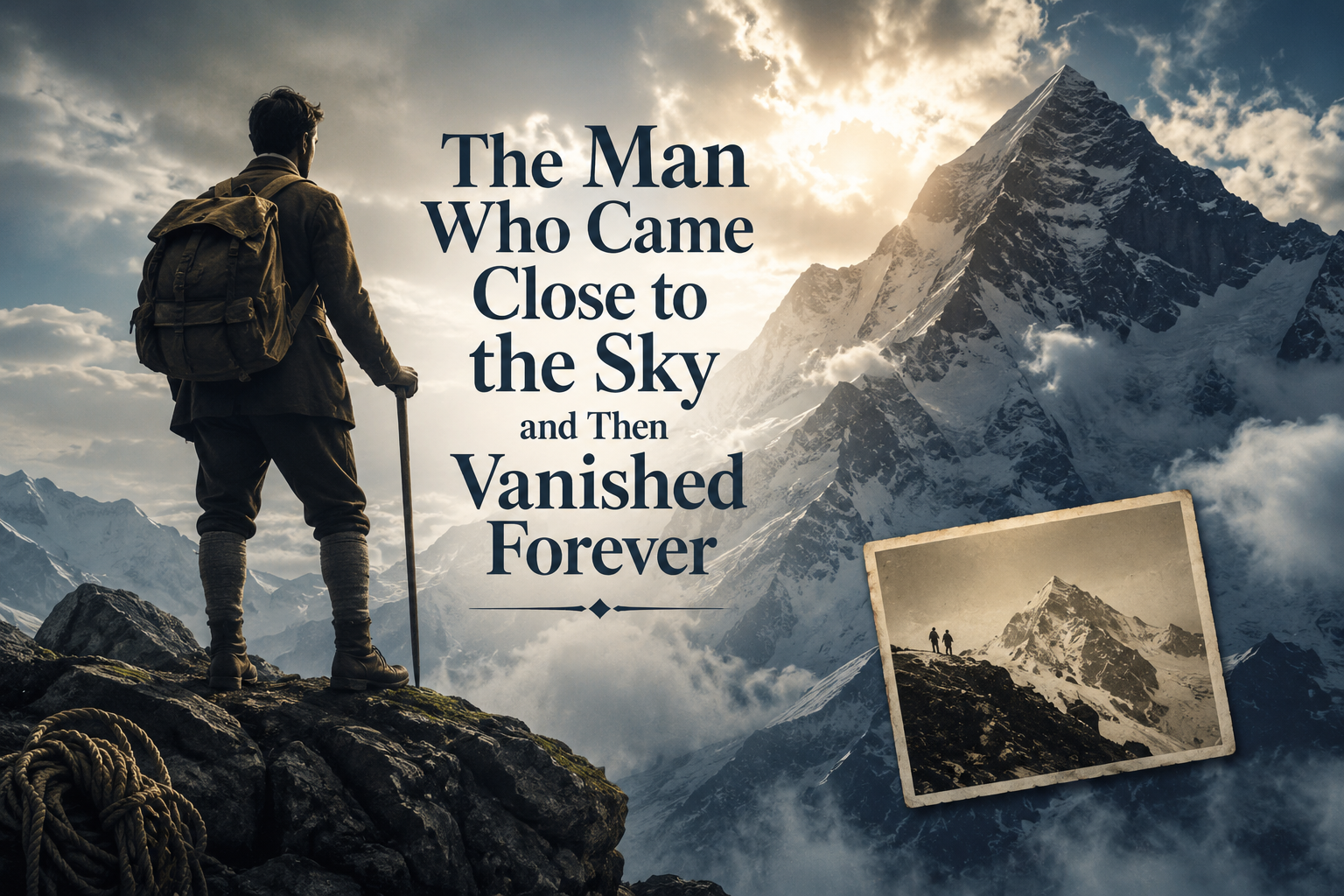
Among the greatest unsolved mysteries in the history of exploration, few stories are as fascinating as the George Mallory Mystery. Nearly a century after his disappearance on Mount Everest, climbers, historians, and adventure enthusiasts continue to debate a single question: Did George Mallory reach the summit of Everest before he died?
The mystery has captivated the world for decades because it combines courage, ambition, tragedy, and uncertainty. While many climbers have successfully conquered Everest since then, the story of George Mallory remains one of the mountain’s most enduring legends.
Who Was George Mallory?
George Mallory was a British mountaineer born in 1886. He became famous for his participation in the early British expeditions to Mount Everest during the 1920s. At that time, Everest was still largely unexplored, and reaching its summit seemed almost impossible.
Mallory possessed exceptional climbing skills and a deep passion for adventure. When asked why he wanted to climb Everest, he reportedly gave one of the most famous answers in exploration history:
“Because it’s there.”
This simple statement perfectly captured the spirit of exploration that defined Mallory’s life.
The Race to Conquer Everest
During the early twentieth century, climbing Everest represented one of humanity’s greatest challenges. Modern climbing equipment did not exist, weather forecasting was limited, and climbers lacked many of the technologies available today.
The British organized several expeditions to Everest, hoping to become the first people to stand on the highest point on Earth. Mallory participated in expeditions in 1921, 1922, and 1924, gaining valuable experience with each attempt.
By 1924, he was determined to make one final push toward the summit.
The Final Expedition
In June 1924, George Mallory and his climbing partner Andrew Irvine set out on what would become one of the most famous climbs in history.
The two men were last seen alive on June 8, 1924. A fellow climber observed them ascending high on Everest’s northeast ridge. At the time, they appeared to be making good progress toward the summit.
However, clouds soon covered the mountain.
Neither man was ever seen alive again.
Their disappearance marked the beginning of the George Mallory Mystery, a question that would remain unanswered for generations.
Did Mallory Reach the Summit?
The central mystery revolves around whether Mallory and Irvine reached Everest’s summit before their deaths.
If they succeeded, they would have become the first people to climb Everest, nearly three decades before Edmund Hillary and Tenzing Norgay achieved the first confirmed ascent in 1953.
Several clues have fueled the debate:
Evidence Supporting the Theory
Some experts believe Mallory may have reached the summit because:
- He was one of the strongest climbers of his era.
- He had extensive knowledge of Everest’s terrain.
- Witnesses reported seeing him high on the mountain.
- He carried a photograph of his wife that he planned to leave on the summit, but the photograph was never found.
This missing photograph has become one of the most discussed pieces of evidence in the George Mallory Mystery.
Evidence Against the Theory
Others argue that reaching the summit would have been extremely difficult.
The route included challenging rock sections that even modern climbers find demanding. Mallory and Irvine were using primitive equipment, heavy clothing, and limited oxygen systems compared to today’s standards.
Many experts believe these obstacles may have prevented them from reaching the top.
Discovery of Mallory’s Body
For decades, the mystery remained unsolved.
Then, in 1999, a climbing expedition searching Everest discovered George Mallory’s body approximately 8,155 meters above sea level. The discovery shocked the mountaineering world.
His remains were remarkably preserved by the mountain’s freezing conditions.
Researchers found several personal items, including:
- Goggles
- Altimeter fragments
- Personal papers
- Clothing and equipment
However, they did not find a camera that could have contained photographs from the summit attempt.
The absence of the camera only deepened the mystery.
Why the Mystery Endures
The George Mallory Mystery continues to fascinate people because it represents more than a climbing story.
It symbolizes humanity’s desire to explore the unknown and push beyond perceived limits. Mallory lived during a period when exploration still involved enormous risks and little certainty.
Unlike many historical questions that eventually receive definitive answers, the mystery of Mallory’s final hours remains unresolved.
Without clear photographic evidence or eyewitness testimony, historians can only analyze clues and develop theories.
The Search for Andrew Irvine
Another important piece of the puzzle is Andrew Irvine.
Although Mallory’s body was discovered, Irvine’s remains remained missing for many years. Many researchers believe that if Irvine’s camera were ever found, it might contain photographs capable of solving the mystery once and for all.
As a result, climbers and historians continue searching Everest in hopes of uncovering new evidence.
The possibility of finding answers keeps the story alive.
Mallory’s Legacy
Regardless of whether he reached the summit, George Mallory’s legacy is secure.
His courage inspired generations of climbers and adventurers. Today, he is remembered as one of the most influential figures in mountaineering history.
Many people argue that the true significance of Mallory’s story lies not in whether he reached the summit but in his willingness to attempt what others believed impossible.
His determination embodies the spirit of exploration that continues to drive human achievement.
Conclusion
The George Mallory Mystery remains one of history’s greatest unsolved exploration stories. Nearly a century after George Mallory and Andrew Irvine disappeared on Mount Everest, the world still wonders whether they achieved the impossible before tragedy struck.
Perhaps the answer is still hidden somewhere among Everest’s icy slopes. Until definitive evidence emerges, the mystery will continue to inspire debate, curiosity, and admiration.
Whether he reached the summit or not, George Mallory came closer to the sky than almost anyone before him—and in doing so, he became immortal in the history of human exploration.