
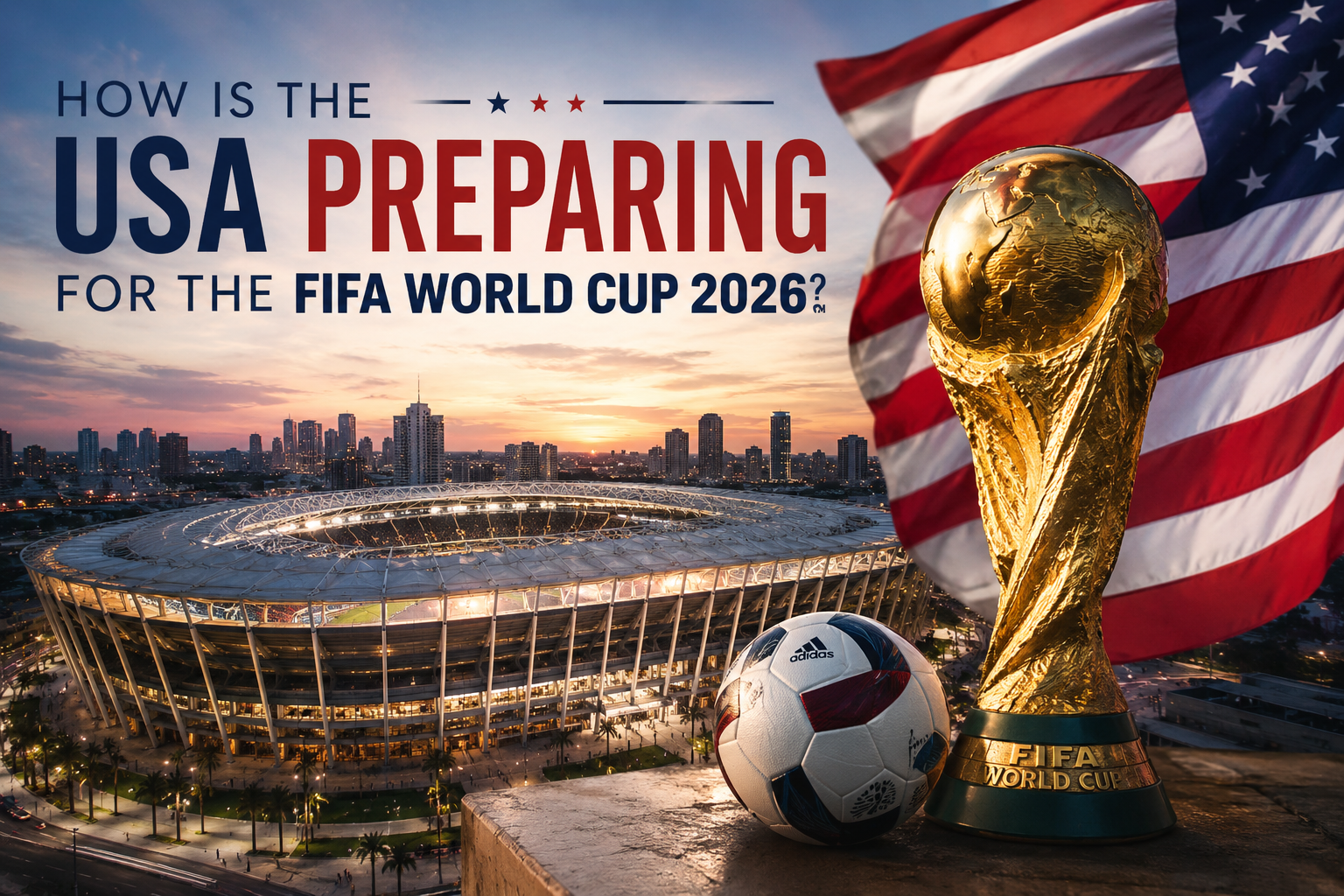
The USA Preparing for FIFA World Cup 2026 initiative represents one of the largest sporting preparation projects in the country’s history. As the United States, alongside Canada and Mexico, hosts the FIFA World Cup 2026, millions of football fans from around the globe are expected to visit North America. The tournament will not only showcase the world’s best national teams but also test the readiness of host cities, transportation systems, security networks, and stadium infrastructure.
With the tournament drawing closer, the United States has intensified its efforts to ensure a successful and memorable event. From upgrading stadiums to improving transportation and strengthening security measures, the country is investing heavily in preparation for what is expected to be the biggest FIFA World Cup ever.
Why the FIFA World Cup 2026 Is Historic
The FIFA World Cup 2026 will be unlike any previous edition of the tournament. For the first time in history, 48 teams will participate instead of the traditional 32. This expansion means more matches, more fans, and greater logistical challenges.
The United States will host the majority of the games, including some of the most important knockout-stage matches. Major cities such as New York, Los Angeles, Miami, Dallas, Atlanta, Seattle, and Houston are expected to become global football hubs during the tournament.
This historic event provides an opportunity for the United States to demonstrate its ability to organize a world-class sporting spectacle while generating significant economic benefits.
Stadium Upgrades and Modernization
One of the most visible aspects of the USA preparing for FIFA World Cup 2026 is the modernization of stadium facilities.
Although many American stadiums are already among the most advanced in the world, several venues have undergone renovations to meet FIFA requirements. These improvements include:
- Enhanced seating arrangements.
- Upgraded hospitality areas.
- Improved fan experience technologies.
- Better accessibility for people with disabilities.
- Modern media and broadcasting facilities.
The host stadiums are designed to accommodate tens of thousands of spectators while providing an unforgettable match-day experience. Advanced digital systems, high-speed internet connectivity, and state-of-the-art security technologies are also being implemented.
Transportation Infrastructure Improvements
A successful World Cup depends heavily on efficient transportation. Millions of visitors will travel between cities, airports, hotels, and stadiums throughout the tournament.
To address this challenge, several host cities have invested in transportation infrastructure improvements. These include:
Airport Expansions
Major airports are increasing capacity to handle the expected surge in international travelers. New terminals, improved security checkpoints, and upgraded passenger services are being introduced.
Public Transit Enhancements
Many cities are improving metro systems, bus networks, and rail services to facilitate easier movement for fans. Special routes and event-based transportation services are also being planned.
Smart Mobility Solutions
Digital transportation apps and real-time travel information systems will help visitors navigate host cities more efficiently during the tournament.
These investments are expected to benefit local residents long after the World Cup ends.
Security Measures for the Tournament
Security remains one of the highest priorities in the USA preparing for FIFA World Cup 2026 strategy.
Given the scale of the event, authorities are implementing extensive security measures to ensure the safety of players, officials, and supporters.
Key security initiatives include:
- Enhanced stadium surveillance systems.
- Increased coordination between federal and local agencies.
- Cybersecurity protection for digital infrastructure.
- Advanced crowd-management technologies.
- Emergency response planning.
The United States has significant experience hosting major sporting events, including the Olympics, Super Bowl, and international football tournaments. This experience provides a strong foundation for managing security challenges during the World Cup.
Economic Impact of the World Cup
The FIFA World Cup 2026 is expected to generate billions of dollars in economic activity across the United States.
Several sectors are likely to benefit significantly:
Tourism
Millions of visitors will spend money on hotels, restaurants, entertainment, and local attractions.
Hospitality Industry
Hotels and accommodation providers are preparing for record demand during the tournament period.
Local Businesses
Small businesses, retailers, and service providers are expected to experience increased customer traffic.
Job Creation
Temporary and permanent jobs are being created through infrastructure projects, event management operations, and tourism-related activities.
Experts believe that the tournament could leave a lasting economic legacy for many host communities.
Technology and Innovation
Technology is playing a major role in the USA preparing for FIFA World Cup 2026 efforts.
The tournament will likely feature some of the most advanced sports technologies ever used at a World Cup.
Innovations include:
- AI-powered crowd management.
- Contactless ticketing systems.
- Advanced stadium connectivity.
- Digital fan engagement platforms.
- Enhanced broadcasting technologies.
These solutions aim to improve both operational efficiency and the overall fan experience.
Sustainability Goals
Modern sporting events increasingly focus on environmental sustainability, and FIFA World Cup 2026 is no exception.
Host cities are implementing various sustainability initiatives, including:
- Energy-efficient stadium operations.
- Waste reduction programs.
- Public transportation incentives.
- Renewable energy projects.
- Sustainable construction practices.
The goal is to minimize the tournament’s environmental footprint while promoting responsible event management.
Fan Experience and Entertainment
Creating memorable experiences for supporters is another major priority.
Organizers are planning:
- Fan festivals in host cities.
- Cultural events and concerts.
- Interactive digital experiences.
- Community engagement activities.
- Family-friendly entertainment zones.
These attractions will allow visitors to enjoy the tournament atmosphere even when they are not attending matches.
The World Cup is expected to transform host cities into vibrant international destinations filled with football culture and celebration.
Challenges Facing the United States
Despite significant progress, several challenges remain.
Managing Large Crowds
The expanded tournament format means larger crowds and more complex logistics.
Transportation Coordination
Moving millions of visitors efficiently across vast distances remains a significant challenge.
Security Risks
Maintaining high security standards while ensuring a positive fan experience requires careful planning.
Operational Complexity
Coordinating multiple host cities across a large geographic area demands extensive cooperation among various stakeholders.
Addressing these challenges successfully will be critical to the tournament’s overall success.
Conclusion
The USA Preparing for FIFA World Cup 2026 project represents an ambitious effort to host the largest FIFA World Cup in history. Through stadium upgrades, transportation improvements, enhanced security measures, technological innovation, and sustainability initiatives, the United States is working to ensure a successful tournament for players and fans alike.
As the competition approaches, preparations continue to accelerate across the country. If successful, FIFA World Cup 2026 could leave a lasting legacy that extends far beyond football, benefiting local communities, strengthening infrastructure, and showcasing the United States on the global stage.