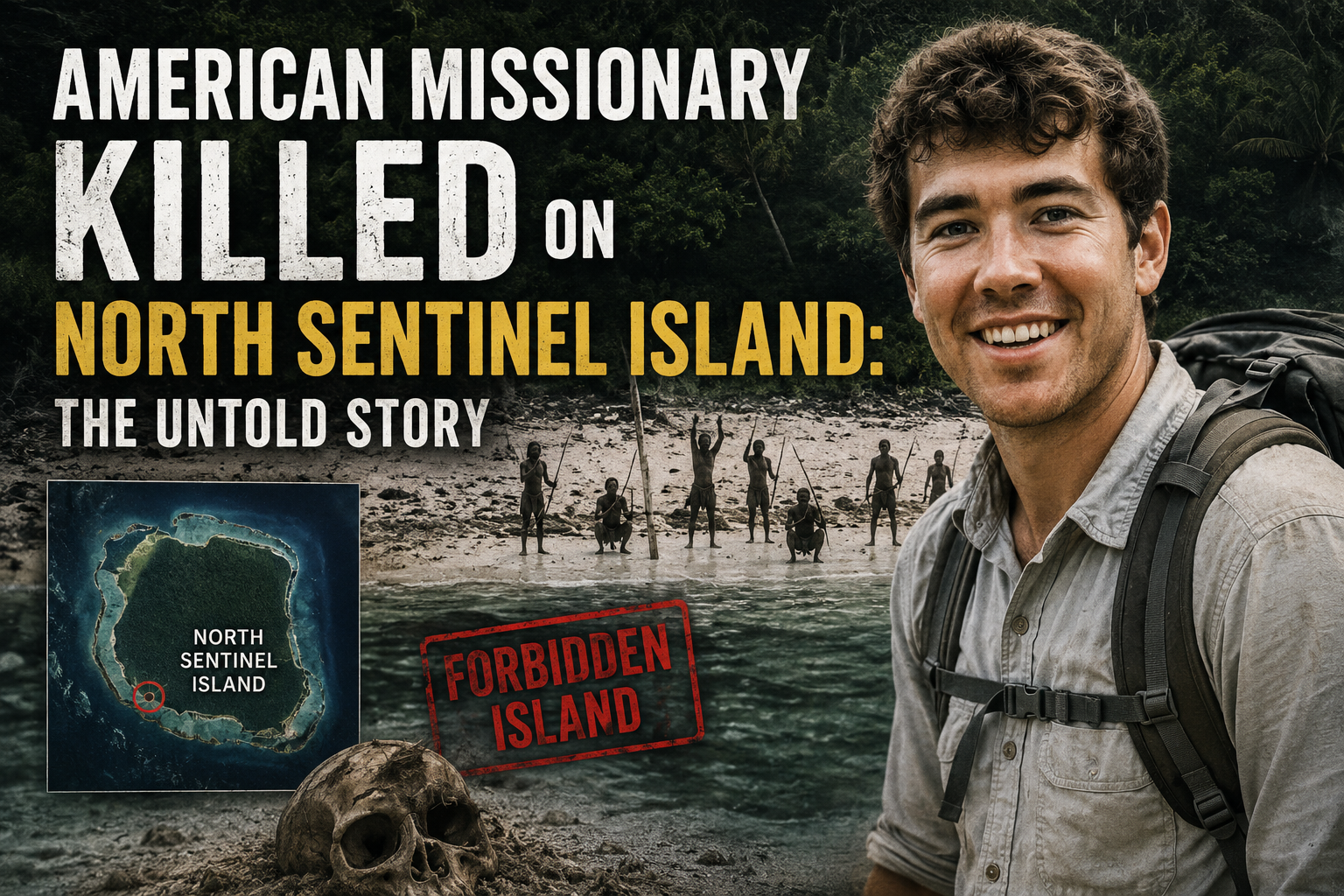
In November 2018, the world learned about John Allen Chau, a young American missionary whose journey to one of the most isolated places on Earth ended in tragedy. His story sparked global debate about faith, exploration, indigenous rights, and the dangers of contacting isolated tribes. Today, the name John Allen Chau remains closely linked to North Sentinel Island and the mysterious Sentinelese people who have lived in isolation for thousands of years.
Who Was John Allen Chau?
John Allen Chau was born in the United States and grew up in a Christian family. From a young age, he developed a strong passion for missionary work and spreading his religious beliefs. Friends and family described him as adventurous, determined, and deeply committed to his faith.
Chau studied at university and participated in various missionary activities throughout his life. He traveled to different countries, helping communities and sharing his religious message. However, his ultimate goal was far more ambitious: he wanted to establish contact with one of the world’s last uncontacted tribes.
His target was North Sentinel Island, a remote island located in the Andaman Sea, part of India’s Andaman and Nicobar Islands.
What Is North Sentinel Island?
North Sentinel Island is one of the most isolated places in the world. The island is home to the Sentinelese, an indigenous tribe that has resisted contact with outsiders for centuries. Experts believe the Sentinelese may have lived in isolation for tens of thousands of years.
The Indian government strictly prohibits visitors from approaching the island. These restrictions exist for several reasons:
- To protect the Sentinelese from diseases carried by outsiders.
- To preserve their traditional way of life.
- To prevent potentially dangerous encounters.
The Sentinelese have a long history of rejecting contact. Several attempts by explorers, researchers, and government officials have been met with hostility, often involving warning shots from bows and arrows.
Why Did John Allen Chau Travel There?
John Allen Chau believed he had a religious mission to bring Christianity to the Sentinelese people. According to his journals and notes, he felt called to visit the island despite knowing the risks involved.
Before his journey, Chau underwent training and preparation. He studied survival skills, received medical vaccinations, and researched the island extensively. He understood that the Sentinelese had rejected previous visitors, but he remained determined to establish peaceful communication.
His writings revealed a deep conviction that his mission was worth the danger. He hoped to build trust with the tribe and eventually share his religious beliefs with them.
The Journey to North Sentinel Island
In November 2018, Chau traveled to the Andaman Islands. Because access to North Sentinel Island was prohibited, he reportedly arranged transportation through local fishermen.
Over several days, he attempted to approach the island using a small boat. During his first encounters, he reportedly tried to communicate with the Sentinelese by speaking, singing, and offering gifts.
However, the tribe reacted cautiously and aggressively. Witnesses reported that arrows were fired toward him during some of his attempts to land on the island.
Despite these warnings, Chau continued his efforts. He believed that persistence and kindness might eventually lead to peaceful contact.
The Tragic Outcome
On his final attempt to visit North Sentinel Island, John Allen Chau landed on the shore alone. According to reports from local fishermen who observed events from a distance, members of the Sentinelese tribe confronted him shortly after he arrived.
He did not return from the island.
The fishermen later reported witnessing the tribe dragging his body across the beach. Due to the extreme risks involved, Indian authorities never recovered his remains.
News of the incident quickly spread around the world, generating headlines across major media outlets and sparking intense public discussion.
Global Reactions
The death of John Allen Chau produced strong reactions from many different groups.
Some people viewed him as a courageous missionary who sacrificed his life for his faith. Supporters admired his dedication and willingness to face extraordinary risks.
Others criticized his decision, arguing that he ignored laws designed to protect both himself and the Sentinelese people. Critics pointed out that isolated tribes have little immunity to modern diseases, meaning even a healthy visitor could unintentionally introduce illnesses with devastating consequences.
Anthropologists, indigenous rights advocates, and government officials emphasized the importance of respecting the Sentinelese tribe’s desire to remain isolated.
The Sentinelese Perspective
Very little is known about the Sentinelese because they have consistently rejected outside contact.
Researchers estimate that the tribe may consist of several dozen to a few hundred individuals. They rely on hunting, fishing, and gathering to survive. Their language remains unknown, and almost no direct communication has ever occurred between them and the outside world.
From the Sentinelese perspective, outsiders arriving on their shores may be viewed as threats. Historical encounters with colonizers, explorers, and government expeditions may have reinforced their determination to defend their territory.
Because of this, many experts believe that preserving their isolation is the best way to ensure their survival.
Lessons from the John Allen Chau Story
The story of John Allen Chau raises important questions about exploration, religion, and cultural preservation.
One key lesson involves respecting indigenous communities and their right to choose isolation. Many isolated tribes face significant risks when exposed to modern society, including disease, cultural disruption, and loss of traditional lifestyles.
Another lesson concerns the balance between personal beliefs and responsibility. While Chau was motivated by sincere religious conviction, his actions also highlighted the potential consequences of entering protected areas against official regulations.
The incident serves as a reminder that good intentions do not always guarantee positive outcomes.
The Legacy of John Allen Chau
Years after his death, John Allen Chau remains a controversial figure. Some remember him as a dedicated missionary who followed his faith to the very end. Others see his journey as a cautionary tale about the dangers of ignoring cultural boundaries and legal protections.
His story continues to be discussed in conversations about missionary work, indigenous rights, and ethical exploration. It also brought renewed international attention to North Sentinel Island and the Sentinelese tribe.
Today, the island remains protected, and access is still heavily restricted. The Sentinelese continue to live much as they have for generations, isolated from the modern world.
Conclusion
The story of John Allen Chau is one of faith, determination, and tragedy. His attempt to contact the Sentinelese tribe on North Sentinel Island ended in death, but it also sparked important global discussions about cultural respect, indigenous rights, and the limits of exploration.
While opinions about his actions differ, there is little doubt that the case of John Allen Chau remains one of the most remarkable and debated encounters between the modern world and an isolated indigenous community. For many, it serves as a powerful reminder that some places and cultures choose to remain untouched, and that choice deserves careful consideration and respect.