
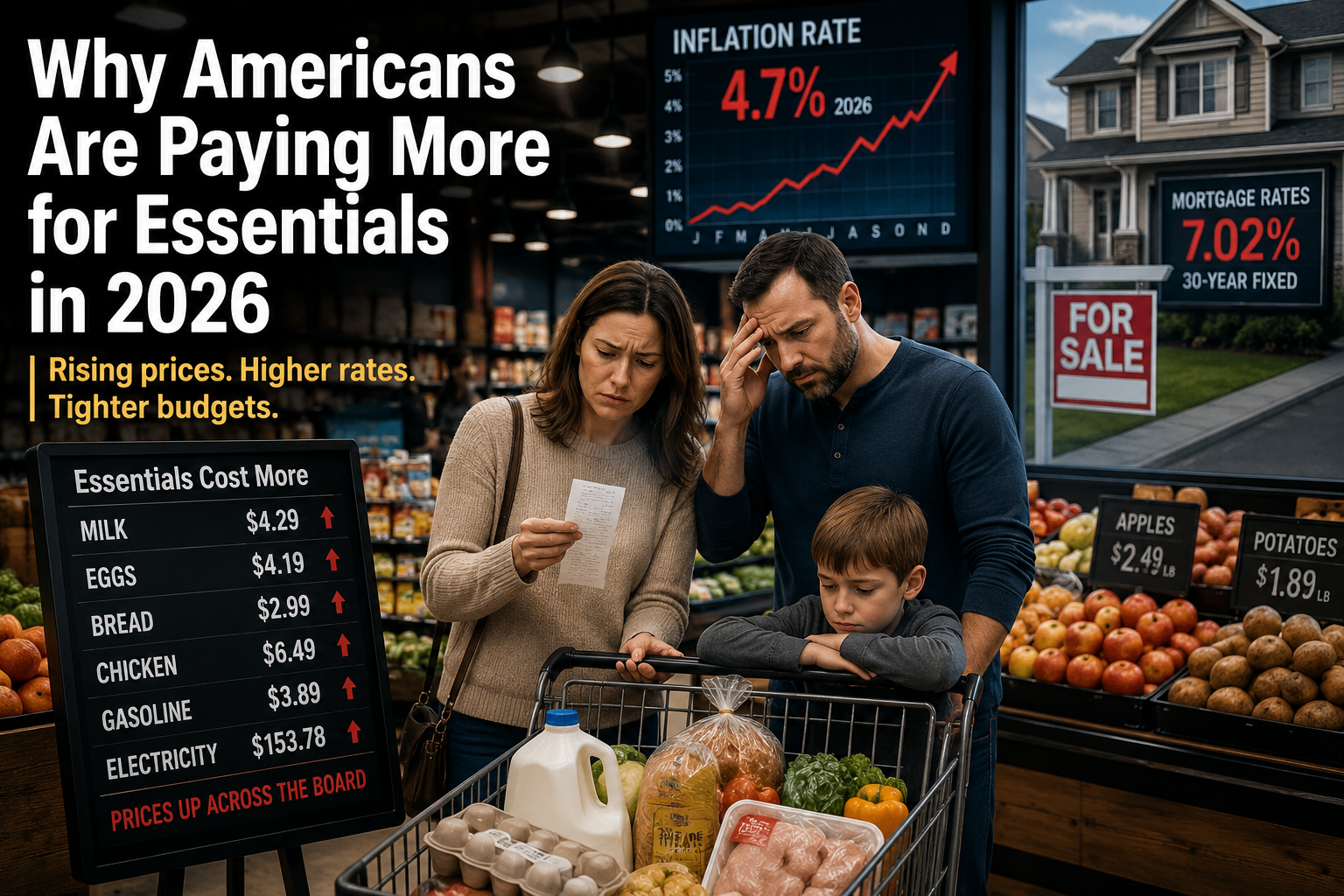
In 2026, one of the biggest concerns among Americans is the rising cost of everyday essentials. From groceries and housing to utilities and transportation, millions of households are finding it increasingly difficult to stretch their budgets. While inflation has slowed compared to the record highs seen in previous years, prices remain significantly higher than they were before the pandemic, leaving many consumers wondering why basic necessities continue to cost more.
The issue has become a major topic of discussion across the United States, influencing consumer spending habits, political debates, and economic policies. Understanding why Americans are paying more for essentials in 2026 requires looking at several interconnected factors, including inflation, housing shortages, labor costs, supply chain adjustments, and global economic conditions.
The Lasting Effects of Inflation
Although inflation rates have moderated compared to the peaks experienced in 2022 and 2023, the cumulative impact of price increases continues to affect American consumers.
Many people misunderstand inflation by assuming that when inflation slows down, prices will return to previous levels. In reality, lower inflation simply means prices are rising more slowly. Most prices rarely fall back to their original levels unless there is a significant economic downturn.
As a result, Americans are still paying considerably more for everyday necessities than they did just a few years ago. Items such as food, household goods, healthcare services, and transportation remain expensive because businesses have adjusted their pricing structures to accommodate higher operating costs.
Grocery Bills Continue to Rise
Food prices remain one of the most visible examples of the increased cost of living.
American families continue to spend more on groceries due to several factors:
- Higher transportation costs
- Increased labor expenses
- Climate-related disruptions affecting agriculture
- Rising packaging costs
- More expensive energy prices
Products such as eggs, dairy, meat, fresh produce, and packaged foods have experienced significant price increases over recent years. Even when wholesale prices stabilize, retailers often maintain higher prices to offset increased operational expenses.
Many consumers report spending hundreds of dollars more each month on groceries compared to pre-pandemic years. This trend has forced families to seek discounts, buy generic brands, and reduce discretionary spending.
Housing Costs Remain a Major Burden
One of the largest contributors to financial stress in 2026 is housing.
The United States continues to face a shortage of affordable homes in many regions. Demand remains strong while supply struggles to keep pace, keeping home prices elevated.
Several factors contribute to high housing costs:
Limited Housing Supply
Construction activity has increased in some areas, but not enough to meet demand. Regulatory restrictions, zoning challenges, and rising construction costs have slowed the pace of new housing developments.
High Mortgage Rates
Mortgage rates remain relatively high compared to the historically low rates available during the pandemic years. Higher borrowing costs significantly increase monthly payments for homebuyers.
For example, a mortgage payment on a typical home in 2026 may be hundreds of dollars more per month than it would have been only a few years earlier.
Rising Rental Prices
Many Americans who cannot afford to purchase homes remain in the rental market, increasing demand for apartments and rental properties. This continued demand contributes to higher rents across many metropolitan areas.
Utility Bills Are Increasing
Electricity, natural gas, water, and other utility services have become more expensive.
Energy providers face rising infrastructure costs, maintenance expenses, and investments in modernizing power grids. These costs are often passed on to consumers through higher monthly bills.
Extreme weather events have also increased the need for investments in resilient infrastructure, particularly in areas prone to hurricanes, wildfires, and severe storms.
As a result, households are spending a larger portion of their income on utilities than they did in previous years.
Higher Labor Costs Affect Consumer Prices
The labor market remains relatively strong in 2026, with many industries competing for workers.
To attract and retain employees, businesses have raised wages. While higher wages benefit workers, they also increase operating costs for employers.
Industries particularly affected include:
- Restaurants
- Retail stores
- Transportation companies
- Healthcare providers
- Hospitality businesses
When labor costs rise, businesses often pass those expenses on to consumers through higher prices.
This dynamic contributes to increased costs for dining out, healthcare services, home repairs, and many other everyday expenses.
Transportation Expenses Remain Elevated
Transportation plays a crucial role in determining the cost of goods and services.
Even modest increases in fuel prices can affect the entire economy because nearly every product requires transportation at some stage.
Americans continue to face higher costs related to:
- Gasoline
- Vehicle maintenance
- Auto insurance
- Public transportation
- Shipping and delivery services
Insurance premiums, in particular, have risen sharply in some states due to increased repair costs and more expensive vehicle technology.
As transportation expenses increase, businesses often adjust product pricing to maintain profitability.
Supply Chains Have Changed Permanently
The global supply chain disruptions experienced earlier in the decade revealed vulnerabilities in international trade networks.
Since then, many companies have sought to reduce dependence on overseas suppliers by relocating production closer to domestic markets. While these changes improve resilience, they often increase manufacturing costs.
Domestic production can be more expensive because of:
- Higher wages
- Stricter regulations
- Increased environmental standards
- Greater operational expenses
While consumers may benefit from more reliable supply chains, they often pay higher prices for products manufactured under these conditions.
Healthcare Costs Continue Rising
Healthcare remains one of the most expensive necessities for many Americans.
Medical expenses continue to increase due to:
- Advanced medical technologies
- Higher labor costs
- Growing demand for healthcare services
- Rising pharmaceutical expenses
Insurance premiums, deductibles, and out-of-pocket costs have increased for many households, placing additional pressure on family budgets.
For older Americans and those managing chronic health conditions, healthcare expenses can represent a substantial portion of monthly spending.
Global Economic Factors Play a Role
The American economy does not operate in isolation.
International events continue to influence domestic prices through:
- Energy markets
- Commodity prices
- Trade policies
- Currency fluctuations
- Geopolitical tensions
Conflicts, supply disruptions, and economic uncertainty in various regions of the world can affect the prices Americans pay for fuel, food, electronics, and other essential goods.
Global interconnectedness means that events occurring thousands of miles away can directly impact household budgets in the United States.
Consumer Spending Habits Are Changing
As costs rise, many Americans are adapting their financial behavior.
Common strategies include:
- Shopping at discount retailers
- Purchasing store-brand products
- Delaying major purchases
- Reducing entertainment expenses
- Seeking additional sources of income
Financial experts report that consumers are becoming more price-conscious and actively comparing prices before making purchases.
This shift reflects broader concerns about economic uncertainty and affordability.
What Economists Expect Going Forward
Many economists believe inflation will continue to moderate over time, but they do not expect a significant decline in overall prices.
Instead, future improvements are likely to come through:
- Gradual wage growth
- Increased housing construction
- Enhanced productivity
- More efficient supply chains
- Stabilized energy markets
However, challenges remain. Housing shortages, healthcare costs, and demographic changes may continue to place upward pressure on prices for years to come.
Conclusion
The question of Why Americans Are Paying More for Essentials in 2026 can be answered through a combination of economic forces that have reshaped the cost of living across the country. While inflation may no longer be rising at the dramatic pace seen in previous years, the cumulative effect of years of price increases continues to impact households nationwide.
Higher housing costs, expensive groceries, rising utility bills, increased labor expenses, healthcare costs, and global economic pressures all contribute to the financial challenges facing American consumers. As families adapt to this new reality, affordability remains one of the most important economic issues in the United States.
For millions of Americans, managing everyday expenses has become a constant balancing act, highlighting the lasting effects of inflation and the ongoing struggle to maintain financial stability in 2026.