
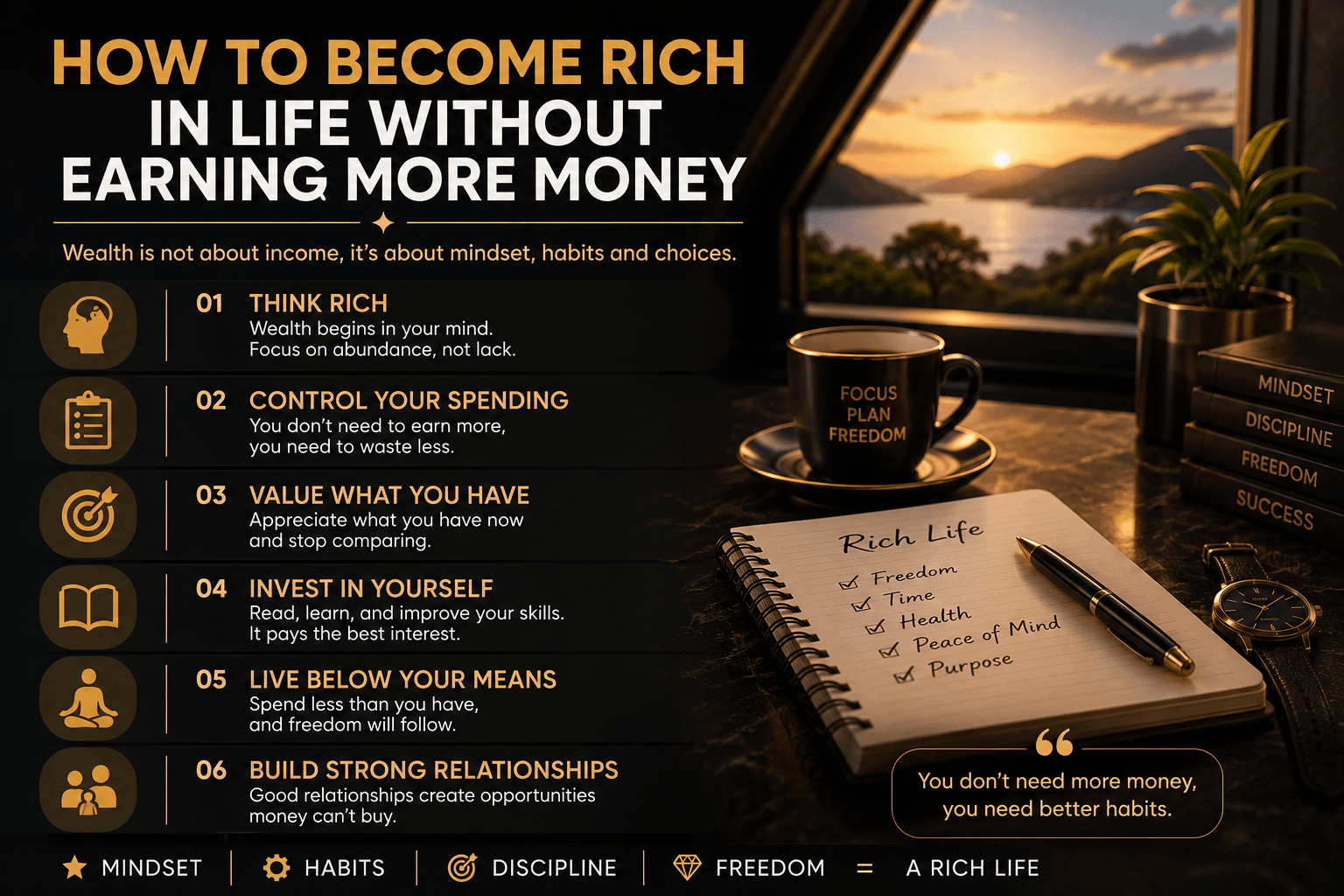
Many people believe that becoming rich requires a higher salary, a winning lottery ticket, or a successful business. While earning more money can certainly help, it is not the only path to wealth. In fact, many high-income earners struggle financially because they spend everything they make, while others with average incomes quietly build significant wealth over time.
If you want to become rich without more money, you need to focus on how you manage your resources, develop your mindset, and create habits that support long-term financial success. True wealth is not simply about income—it is about what you keep, grow, and use wisely.
In this guide, you will discover practical strategies that can help you build wealth, improve your financial security, and create a richer life without increasing your earnings.
What Does It Mean to Become Rich Without More Money?
When people think about wealth, they often focus on income. However, wealth is different from earnings. Income is the money you receive, while wealth is the value of what you own after expenses and debts are paid.
Someone earning $50,000 per year who saves and invests consistently may become wealthier than someone earning $200,000 per year who spends everything they earn.
To become rich without more money, your goal should be to maximize the value of every dollar you already have and make smarter decisions about spending, saving, and investing.
Change Your Definition of Wealth
One of the most powerful mindset shifts is redefining what it means to be rich.
Many people associate wealth with luxury cars, designer clothes, and expensive homes. While these items may look impressive, they do not necessarily represent financial security.
True wealth includes:
- Financial freedom
- Low stress about money
- Strong relationships
- Good health
- Valuable skills
- Time to enjoy life
- Freedom to make choices
The moment you stop chasing appearances and start focusing on long-term value, your financial future improves dramatically.
Track Where Your Money Goes
Most people underestimate how much money they spend each month.
Small purchases often seem harmless, but they can add up quickly over time. Coffee runs, subscription services, impulse purchases, and frequent dining out can quietly drain thousands of dollars every year.
Start by tracking every expense for at least one month.
You may discover:
- Unused subscriptions
- Unnecessary purchases
- Duplicate services
- Spending habits driven by emotion
Awareness is the first step toward financial improvement.
Live Below Your Means
Living below your means is one of the oldest and most effective wealth-building principles.
This does not mean living miserably or depriving yourself of everything you enjoy. Instead, it means spending less than you earn and avoiding lifestyle inflation.
Lifestyle inflation occurs when your spending rises every time your income increases.
People often upgrade:
- Cars
- Phones
- Clothing
- Housing
- Entertainment
As a result, they remain financially stuck despite earning more.
By keeping expenses reasonable and avoiding unnecessary upgrades, you create room for savings and investments that grow over time.
Build Strong Saving Habits
Saving money is the foundation of financial stability.
Many people wait until the end of the month to save whatever remains. Unfortunately, there is often nothing left.
A better approach is to pay yourself first.
Whenever you receive income:
- Set aside savings immediately.
- Transfer money to a separate account.
- Treat savings as a mandatory expense.
Even small amounts saved consistently can produce impressive results over several years.
Consistency matters more than size.
Invest in Yourself
One of the best ways to become rich without more money is by increasing your personal value.
Investing in yourself can provide benefits that last for decades.
Consider improving:
- Communication skills
- Leadership abilities
- Financial knowledge
- Time management
- Technical skills
- Emotional intelligence
Books, online courses, workshops, and educational content often provide exceptional returns compared to their cost.
The more valuable your skills become, the more opportunities you create for the future.
Avoid High-Interest Debt
Debt can be one of the biggest obstacles to wealth creation.
Credit card balances and high-interest loans can consume money that could otherwise be invested or saved.
To improve your financial position:
- Pay off high-interest debt first.
- Avoid unnecessary borrowing.
- Use credit responsibly.
- Create a realistic repayment plan.
Reducing debt increases your financial flexibility and helps you retain more of your income.
Learn the Power of Investing
Many people assume investing is only for the wealthy.
In reality, investing is often how ordinary people become wealthy.
Money left sitting in a savings account may lose purchasing power due to inflation. Investments, on the other hand, have the potential to grow over time.
Popular investment options include:
- Index funds
- Exchange-traded funds (ETFs)
- Retirement accounts
- Dividend-paying stocks
- Real estate investment trusts (REITs)
The earlier you start, the greater the potential benefit from compound growth.
Master Delayed Gratification
Successful wealth builders understand the value of patience.
Instead of buying something immediately, they ask:
- Do I really need this?
- Will I still want it in a month?
- Is this purchase aligned with my goals?
Practicing delayed gratification reduces impulse spending and improves financial decision-making.
Every dollar you do not waste today can work toward your future goals tomorrow.
Focus on Experiences Rather Than Possessions
Research consistently shows that experiences often provide longer-lasting happiness than material possessions.
Expensive items may create excitement for a short time, but that feeling often fades quickly.
Meaningful experiences such as:
- Traveling
- Learning new skills
- Spending time with family
- Exploring hobbies
can create lasting memories and improve overall life satisfaction.
This mindset helps reduce unnecessary spending while increasing happiness.
Build Multiple Sources of Value
Even without earning more money today, you can create opportunities that generate value in the future.
Examples include:
- Starting a blog
- Creating digital products
- Learning freelance skills
- Building a personal brand
- Developing passive income projects
Not every project will succeed immediately, but each effort expands your knowledge and opportunities.
Wealth often grows from small actions repeated consistently over time.
Surround Yourself with Positive Influences
Your environment has a significant impact on your financial habits.
People who constantly encourage spending can make saving difficult.
Instead, seek out:
- Financially responsible friends
- Educational communities
- Business-minded individuals
- Personal development resources
Positive influences can inspire better decisions and help you stay focused on long-term goals.
Develop a Long-Term Perspective
Many people fail financially because they focus only on short-term rewards.
Building wealth requires patience.
Ask yourself:
- Where do I want to be in five years?
- What financial goals matter most?
- Which habits support those goals?
Small improvements made consistently over time often produce extraordinary results.
The most successful wealth builders understand that financial growth is a marathon, not a sprint.
Practice Gratitude
Gratitude may not seem like a financial strategy, but it can significantly influence spending behavior.
People who appreciate what they already have are less likely to make impulsive purchases in search of temporary satisfaction.
Gratitude encourages:
- Better financial decisions
- Reduced materialism
- Increased contentment
- Lower stress levels
A rich life begins with appreciating what is already present.
Create a Personal Wealth Plan
Without a plan, financial goals often remain dreams.
A simple wealth plan should include:
Financial Goals
Define what success looks like for you.
Monthly Budget
Track income and expenses carefully.
Savings Targets
Set realistic savings goals.
Investment Strategy
Determine how you will grow your money.
Debt Reduction Plan
Prioritize eliminating costly debt.
Review your plan regularly and adjust as needed.
Conclusion
Learning how to become rich without more money is not about finding a secret shortcut or getting lucky. It is about making smarter decisions with the resources you already have.
By living below your means, tracking expenses, saving consistently, investing wisely, avoiding unnecessary debt, and developing valuable skills, you can build lasting wealth regardless of your current income level.
True wealth is not measured solely by the amount of money you earn. It is measured by your freedom, security, opportunities, and ability to live life on your own terms.
Start applying these principles today, and you may discover that becoming rich has far more to do with your habits and mindset than with earning more money.