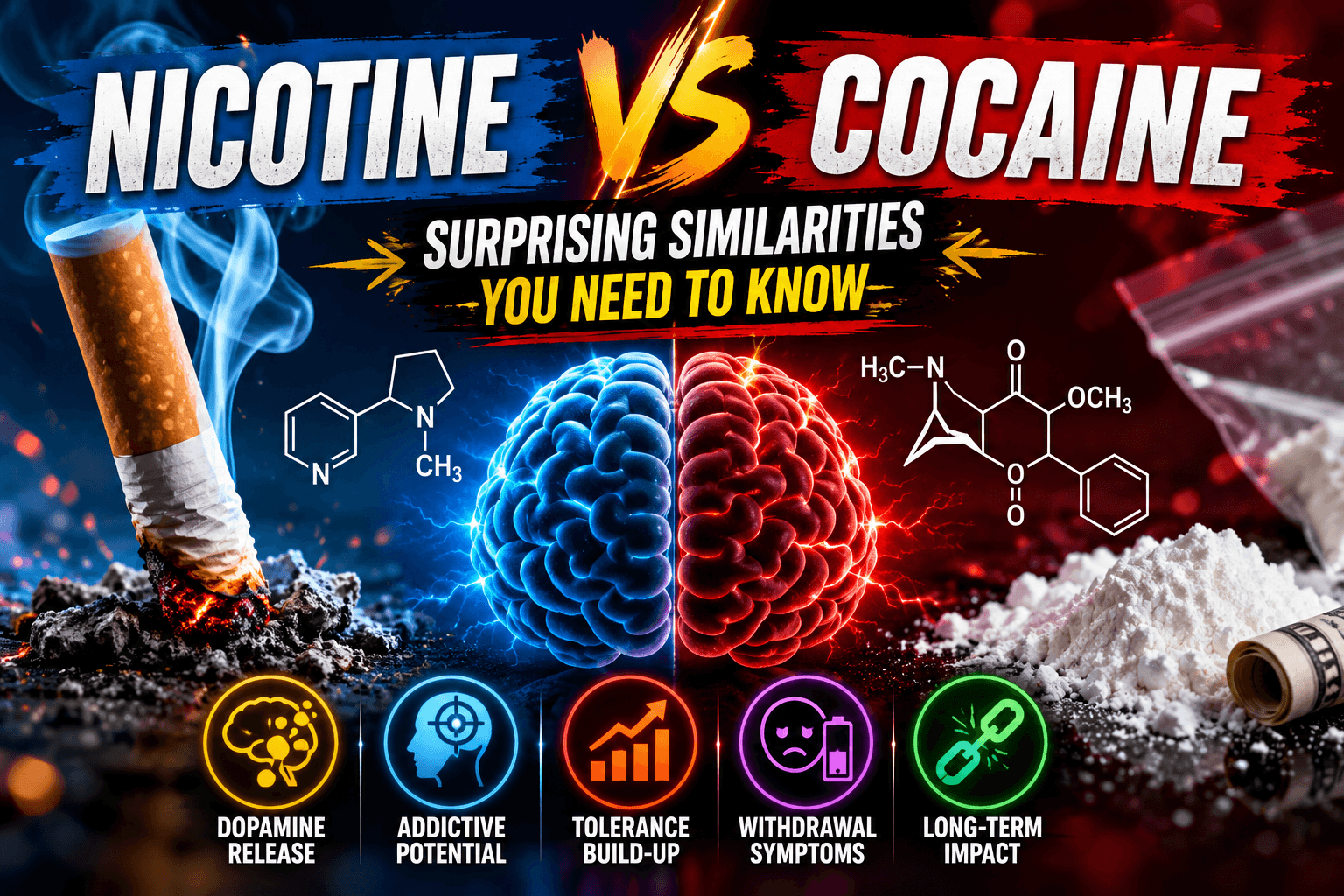
When people hear the words nicotine and cocaine, they often place them in completely different categories. Nicotine is a legal substance found in cigarettes, cigars, and vaping products, while cocaine is an illegal stimulant drug associated with serious health risks and addiction. However, scientific research has revealed that there are several surprising similarities between these two substances, particularly in the way they affect the brain.
Understanding the relationship between Nicotine vs Cocaine can help people make informed decisions about their health and recognize the potential dangers of addiction.
What Is Nicotine?
Nicotine is a naturally occurring chemical found in tobacco plants. It is the primary addictive ingredient in cigarettes and many vaping products.
When nicotine enters the bloodstream, it quickly reaches the brain, often within seconds. Once there, it stimulates receptors that release dopamine, a neurotransmitter associated with pleasure, reward, and motivation.
Common sources of nicotine include:
- Cigarettes
- Cigars
- E-cigarettes and vapes
- Chewing tobacco
- Nicotine pouches
- Nicotine replacement products
Although nicotine itself is not the main cause of smoking-related cancers, it is highly addictive and keeps users dependent on tobacco products.
What Is Cocaine?
Cocaine is a powerful stimulant drug derived from the coca plant. It is illegal in most countries and is known for producing intense feelings of euphoria, energy, and confidence.
Cocaine works by blocking the reabsorption of dopamine in the brain. This causes dopamine levels to rise dramatically, creating a powerful reward effect that can quickly lead to addiction.
Common effects of cocaine include:
- Increased energy
- Elevated mood
- Increased alertness
- Reduced fatigue
- Temporary confidence boost
However, repeated cocaine use can cause severe physical, mental, and social consequences.
Nicotine vs Cocaine: How They Affect the Brain
One of the most important similarities in the Nicotine vs Cocaine comparison is their effect on the brain’s reward system.
Both substances increase dopamine activity, although they do so through different mechanisms.
Nicotine and Dopamine
Nicotine activates nicotinic acetylcholine receptors, which stimulate dopamine release in the brain’s reward pathway.
This dopamine surge creates pleasurable feelings and reinforces the desire to continue using nicotine products.
Cocaine and Dopamine
Cocaine prevents dopamine from being reabsorbed by nerve cells. As dopamine accumulates, users experience intense pleasure and stimulation.
Although cocaine generally creates a stronger dopamine response, both substances manipulate the same reward circuits.
Why Are Both Substances Addictive?
Addiction develops when the brain begins to rely on a substance for pleasure, stress relief, or normal functioning.
Both nicotine and cocaine can create:
1. Cravings
Users often experience powerful urges to consume the substance again.
2. Tolerance
Over time, the brain becomes less responsive, requiring larger amounts or more frequent use to achieve the same effect.
3. Dependence
The body adapts to the substance, making it difficult to stop without experiencing withdrawal symptoms.
4. Withdrawal
When use stops, uncomfortable symptoms can occur, encouraging continued consumption.
These characteristics explain why both nicotine and cocaine are considered highly addictive substances.
Withdrawal Symptoms: Nicotine vs Cocaine
Withdrawal can be challenging for users of both substances.
Nicotine Withdrawal
Common symptoms include:
- Irritability
- Anxiety
- Difficulty concentrating
- Increased appetite
- Mood swings
- Strong cravings
Cocaine Withdrawal
Common symptoms include:
- Fatigue
- Depression
- Anxiety
- Sleep disturbances
- Intense cravings
- Lack of motivation
While cocaine withdrawal is often more psychologically intense, nicotine withdrawal can also be extremely difficult and is a major reason many smokers struggle to quit.
Health Risks Associated with Nicotine
Many people underestimate nicotine because it is legal. However, nicotine use can contribute to significant health concerns.
Potential risks include:
- Increased heart rate
- Elevated blood pressure
- Cardiovascular disease risk
- Reduced lung function when combined with smoking
- Increased dependence on tobacco products
Long-term smoking remains one of the leading causes of preventable death worldwide.
Health Risks Associated with Cocaine
Cocaine presents serious health dangers, especially with frequent use.
Potential risks include:
- Heart attacks
- Stroke
- High blood pressure
- Seizures
- Mental health disorders
- Respiratory complications
- Overdose
The risks increase significantly when cocaine is combined with alcohol or other drugs.
Key Differences Between Nicotine and Cocaine
While the similarities are important, there are also major differences.
| Factor | Nicotine | Cocaine |
|---|---|---|
| Legal Status | Legal in many countries | Illegal in most countries |
| Source | Tobacco plant | Coca plant |
| Dopamine Effect | Moderate stimulation | Intense stimulation |
| Addiction Potential | High | Very high |
| Overdose Risk | Lower | Significantly higher |
| Social Impact | Widely accepted in some cultures | Generally prohibited |
These differences help explain why cocaine is considered more dangerous in many situations, despite sharing some addictive mechanisms with nicotine.
Why the Comparison Matters
The comparison of Nicotine vs Cocaine is not intended to suggest that both substances are equally harmful. Instead, it highlights how addiction works within the brain.
Many people are surprised to learn that nicotine activates reward pathways similar to those affected by cocaine. This explains why quitting smoking or vaping can be so difficult despite nicotine’s legal status.
Understanding these similarities can encourage greater awareness about addiction, public health, and the importance of prevention.
Conclusion
The debate surrounding Nicotine vs Cocaine reveals fascinating insights into human brain chemistry. Although nicotine and cocaine differ greatly in legality, intensity, and overall risk, both substances influence dopamine pathways and can lead to addiction, tolerance, cravings, and withdrawal symptoms.
Recognizing these similarities helps us better understand how addictive substances affect behavior and health. Whether discussing tobacco use or illegal drugs, education remains one of the most effective tools for preventing addiction and promoting healthier choices.