Milk has long been considered one of the most important foods in human nutrition. While cow milk remains the most widely consumed dairy product worldwide, growing interest in alternative dairy options has brought donkey milk into the spotlight. As consumers become more health-conscious and seek specialized nutritional solutions, the debate surrounding Donkey Milk vs Cow Milk has gained significant attention.
Both types of milk offer unique nutritional benefits, but they also differ considerably in their composition, digestibility, taste, availability, and potential health effects. Understanding these differences can help consumers make informed dietary choices based on their individual needs.
What Is Donkey Milk?
Donkey milk is produced by female donkeys and has been consumed for thousands of years. Historical records suggest that ancient civilizations, including the Egyptians, Greeks, and Romans, valued donkey milk for its nutritional and cosmetic benefits.
Perhaps the most famous admirer of donkey milk was Cleopatra, who reportedly used it in her skincare routine to maintain healthy and youthful-looking skin.
Today, donkey milk is attracting attention due to its unique nutritional profile and its similarity to human breast milk.
What Is Cow Milk?
Cow milk is one of the most commonly consumed dairy products worldwide. It serves as a primary source of calcium, protein, vitamins, and minerals for millions of people.
Cow milk is available in numerous forms, including:
- Whole milk
- Low-fat milk
- Skim milk
- Organic milk
- Lactose-free milk
Its widespread availability and affordability make it the dominant dairy choice in most countries.
Nutritional Comparison: Donkey Milk vs Cow Milk
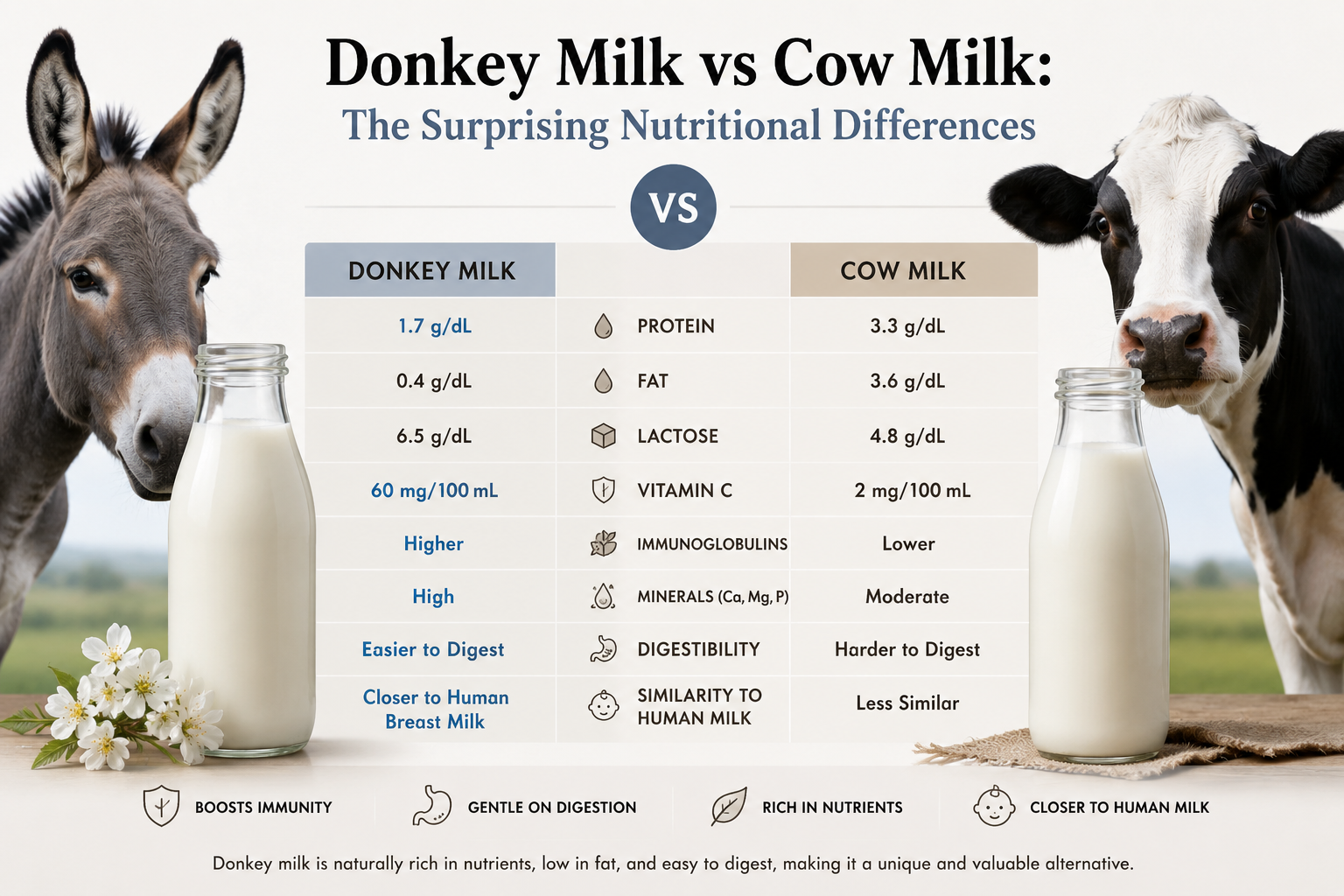
The most important differences between donkey milk and cow milk lie in their nutritional composition.
Protein Content
Cow milk contains approximately 3.2–3.5 grams of protein per 100 ml.
Donkey milk contains roughly 1.5–1.8 grams of protein per 100 ml.
While cow milk provides more protein overall, donkey milk contains proteins that are often considered easier to digest for some individuals.
Fat Content
One of the most noticeable differences is fat concentration.
Cow Milk:
- Around 3–4% fat in whole milk
Donkey Milk:
- Approximately 0.3–1.8% fat
This makes donkey milk a significantly lower-fat option, which may appeal to people seeking lower-calorie dairy products.
Lactose Content
Donkey milk contains a higher lactose concentration than cow milk.
Cow Milk: About 4.5–5%
Donkey Milk: About 6–7%
The higher lactose content contributes to donkey milk’s naturally sweet taste. However, individuals with lactose intolerance should exercise caution.
Vitamin C
Donkey milk contains considerably more vitamin C than cow milk.
This antioxidant vitamin plays an important role in:
- Supporting immune function
- Promoting collagen production
- Protecting cells from oxidative stress
Minerals
Both milks contain important minerals such as:
- Calcium
- Phosphorus
- Magnesium
- Potassium
Cow milk generally provides higher calcium levels, while donkey milk offers a balanced mineral profile that closely resembles human milk.
Similarity to Human Breast Milk
One of the primary reasons for growing interest in donkey milk is its remarkable similarity to human breast milk.
Researchers have found that donkey milk shares several characteristics with human milk, including:
- Lower protein concentration
- Lower fat content
- Higher lactose levels
- Improved digestibility
Because of these similarities, donkey milk has occasionally been explored as a supplementary nutritional option in specialized medical situations under professional supervision.
However, it should never replace infant formula or breast milk without medical guidance.
Digestibility: Which Milk Is Easier to Digest?
Many consumers report that donkey milk feels gentler on the digestive system.
Several factors may contribute to this:
Smaller Protein Structures
The proteins found in donkey milk form softer curds during digestion compared to cow milk.
This can make digestion easier for certain individuals.
Lower Fat Levels
The reduced fat content may lessen digestive discomfort in some people.
Natural Bioactive Compounds
Donkey milk contains naturally occurring compounds such as:
- Lysozyme
- Lactoferrin
- Immunoglobulins
These compounds have attracted scientific interest because of their potential role in supporting overall health.
Potential Health Benefits of Donkey Milk
1. Rich Source of Vitamin C
Donkey milk contains significantly higher vitamin C levels than cow milk.
Vitamin C supports:
- Immune system health
- Skin health
- Wound healing
- Antioxidant protection
2. Lower Calorie Content
Due to its low fat content, donkey milk generally contains fewer calories than whole cow milk.
This may make it appealing for individuals managing calorie intake.
3. Potential Skin Benefits
Some skincare products incorporate donkey milk because of its moisturizing properties and nutrient content.
Although more research is needed, donkey milk remains popular in luxury cosmetic formulations.
4. Digestive Comfort
Some consumers who experience digestive discomfort with traditional dairy products report improved tolerance with donkey milk.
However, individual responses vary.
5. Bioactive Proteins
Scientists continue to study donkey milk’s bioactive proteins and enzymes for their possible health-supporting properties.
Potential Health Benefits of Cow Milk
Cow milk remains an excellent source of nutrition.
1. High-Quality Protein
Cow milk provides complete protein containing all essential amino acids.
Protein supports:
- Muscle growth
- Tissue repair
- Bone health
- Overall body function
2. Strong Calcium Source
Cow milk is one of the richest dietary sources of calcium.
Calcium supports:
- Bone strength
- Teeth health
- Muscle function
- Nerve signaling
3. B Vitamins
Cow milk supplies important B vitamins including:
- Vitamin B12
- Riboflavin
- Niacin
These nutrients contribute to energy production and nervous system function.
4. Wide Availability
Cow milk is readily available in most supermarkets and remains one of the most affordable dairy options.
Risks and Considerations
When comparing Donkey Milk vs Cow Milk, it is important to understand potential risks.
Lactose Intolerance
Despite being easier to digest for some people, donkey milk contains substantial lactose levels.
Individuals with lactose intolerance may still experience:
- Bloating
- Gas
- Abdominal discomfort
- Diarrhea
Milk Allergies
People with diagnosed milk allergies should consult healthcare professionals before trying donkey milk.
Although some individuals tolerate it better than cow milk, allergic reactions remain possible.
Raw Milk Risks
Whether from cows or donkeys, raw milk can contain harmful bacteria.
Potential pathogens include:
- Salmonella
- E. coli
- Listeria
For safety, consumers should choose properly pasteurized milk whenever possible.
Cost and Availability
Donkey milk is significantly more expensive than cow milk.
Several factors contribute to this:
- Limited production
- Smaller herd sizes
- Lower milk yield per animal
- Specialized farming practices
As a result, donkey milk may not be practical for everyday use in many households.
Taste Comparison
Taste is another important consideration.
Cow Milk
Cow milk generally has:
- A creamy texture
- Rich flavor
- Mild sweetness
Donkey Milk
Donkey milk is often described as:
- Light and refreshing
- Naturally sweeter
- Less creamy
- Mildly delicate in flavor
Consumers accustomed to traditional dairy products may notice a significant difference.
Environmental Considerations
Sustainability is increasingly influencing food choices.
Cow Milk Production
Large-scale dairy farming can have environmental impacts such as:
- Greenhouse gas emissions
- Water consumption
- Land use requirements
Donkey Milk Production
Donkey farming often occurs on a much smaller scale.
However, limited production capacity means it cannot currently compete with cow milk as a large-scale global dairy source.
Environmental impacts vary depending on farming practices and regional conditions.
Who Might Prefer Donkey Milk?
Donkey milk may appeal to:
- Consumers seeking alternative dairy products
- Individuals interested in lower-fat milk options
- People looking for naturally higher vitamin C content
- Consumers interested in specialty nutritional products
However, it should not be viewed as a miracle food or cure for medical conditions.
Who Might Prefer Cow Milk?
Cow milk remains an excellent option for:
- Families seeking affordable nutrition
- Athletes needing higher protein intake
- Individuals looking for high calcium content
- People wanting a widely available dairy product
Its nutritional value, accessibility, and versatility continue to make it a staple food worldwide.
Final Verdict: Donkey Milk vs Cow Milk
The comparison between Donkey Milk vs Cow Milk reveals that each offers unique nutritional advantages.
Donkey milk stands out for its low fat content, higher vitamin C levels, natural sweetness, and composition that resembles human breast milk. It may be easier to digest for some individuals and contains interesting bioactive compounds that continue to attract scientific research.
Cow milk, on the other hand, remains a powerhouse of nutrition. It provides higher protein levels, abundant calcium, essential vitamins, and unmatched affordability and availability.
Ultimately, the better choice depends on individual dietary goals, nutritional needs, health conditions, and personal preferences. For most people, cow milk remains the practical everyday option, while donkey milk serves as an intriguing specialty dairy product with unique characteristics and potential benefits.
As with any dietary change, consulting a healthcare professional is advisable, especially for individuals with allergies, digestive concerns, or specific nutritional requirements.