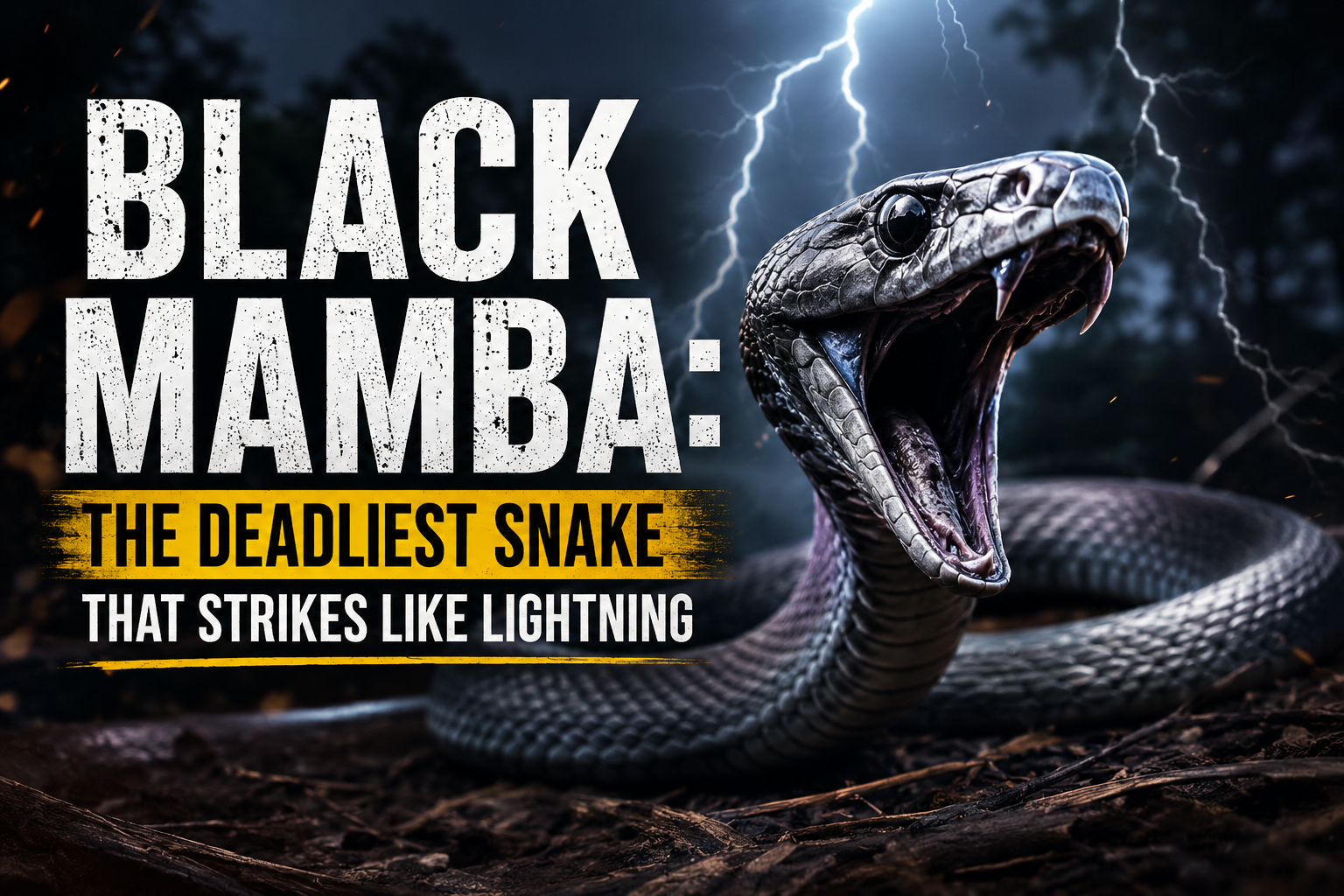
The Black Mamba Snake is one of the most fascinating and feared reptiles on Earth. Known for its incredible speed, highly potent venom, and intimidating reputation, this African predator has become legendary among wildlife enthusiasts and researchers alike. Despite the fear it inspires, the Black Mamba is a remarkable creature that plays an important role in maintaining the balance of its ecosystem.
In this article, we explore everything you need to know about the Black Mamba Snake, including its habitat, behavior, physical characteristics, hunting methods, and the truth behind its deadly reputation.
What Is the Black Mamba Snake?
The Black Mamba Snake (Dendroaspis polylepis) is a highly venomous species native to sub-Saharan Africa. It belongs to the mamba family, a group of fast-moving and dangerous snakes known for their powerful neurotoxic venom.
Contrary to what many people believe, the Black Mamba is not named for the color of its skin. Its body is usually gray, olive, or brown. The name comes from the dark, ink-black coloration inside its mouth, which it displays as a warning when threatened.
The Black Mamba is widely recognized as one of the most dangerous snakes in the world due to its combination of speed, aggression when cornered, and extremely potent venom.
Physical Characteristics
The Black Mamba Snake is among the longest venomous snakes on Earth. Adult specimens typically measure between 2 and 3 meters (6.5 to 10 feet) in length, although some individuals can grow even larger.
Key features include:
- Long and slender body
- Smooth scales
- Coffin-shaped head
- Dark interior mouth
- Large eyes with excellent vision
Its streamlined body allows it to move rapidly across various terrains, making it one of the fastest snakes ever recorded.
The Fastest Snake in Africa
One of the most impressive facts about the Black Mamba Snake is its speed. It can travel at speeds of up to 20 kilometers per hour (12 miles per hour) over short distances.
While it cannot outrun a human over a long distance, its speed is extraordinary for a snake. This ability helps it escape predators, hunt prey efficiently, and move quickly through its habitat.
Its lightning-fast movements are one of the main reasons it has earned such a fearsome reputation throughout Africa.
Where Does the Black Mamba Live?
The Black Mamba Snake is found across many African countries, including:
- South Africa
- Kenya
- Tanzania
- Zimbabwe
- Mozambique
- Uganda
- Ethiopia
It prefers warm environments and can be found in:
- Savannas
- Rocky hillsides
- Open woodlands
- Dry forests
- Grasslands
Unlike many snake species that spend most of their time hiding, Black Mambas are active during the day and often travel considerable distances while searching for food.
What Does the Black Mamba Eat?
The Black Mamba Snake is a carnivorous predator. Its diet mainly consists of:
- Small mammals
- Rats
- Mice
- Squirrels
- Birds
- Bats
Using its exceptional eyesight, the Black Mamba locates prey and strikes with incredible speed. After injecting venom, it often releases the animal and follows it until the venom takes effect.
This strategy reduces the risk of injury from struggling prey and demonstrates the snake’s highly effective hunting technique.
The Power of Black Mamba Venom
The venom of the Black Mamba Snake is among the most potent neurotoxins found in nature.
Its venom attacks the nervous system, disrupting communication between nerves and muscles. Without medical treatment, symptoms can develop rapidly and may include:
- Difficulty breathing
- Blurred vision
- Muscle weakness
- Paralysis
- Respiratory failure
A single bite can deliver enough venom to be fatal to multiple adults. Fortunately, modern antivenom treatments have significantly improved survival rates when administered quickly.
Is the Black Mamba Aggressive?
The Black Mamba is often portrayed as an aggressive killer, but this image is somewhat exaggerated.
In reality, the snake prefers to avoid human contact whenever possible. Most encounters occur when the animal feels trapped, threatened, or surprised.
When cornered, the Black Mamba displays a dramatic defensive posture by:
- Raising part of its body
- Spreading a narrow hood
- Opening its black mouth
- Hissing loudly
These warning signals are designed to scare away potential threats before the snake resorts to biting.
Reproduction and Life Cycle
Black Mamba Snakes reproduce through egg-laying. During the breeding season, males may engage in combat to compete for females.
After mating, the female lays between 6 and 20 eggs in a protected location such as a hollow tree or abandoned burrow.
The eggs hatch after approximately three months. Young Black Mambas are fully venomous from birth and capable of hunting independently without parental care.
This early independence helps increase their chances of survival in the wild.
Natural Predators
Although the Black Mamba is a formidable predator, it is not invincible.
Some animals capable of preying on Black Mambas include:
- Large birds of prey
- Eagles
- Secretary birds
- Mongooses
The mongoose is particularly famous for its ability to fight venomous snakes. Its quick reflexes and partial resistance to venom give it an advantage during encounters.
The Importance of the Black Mamba in Nature
Despite its deadly reputation, the Black Mamba Snake serves an essential ecological purpose.
By controlling populations of rodents and other small animals, it helps maintain balance within ecosystems. Without predators like the Black Mamba, rodent populations could increase dramatically, causing agricultural damage and spreading disease.
Like many predators, the Black Mamba contributes to biodiversity and the overall health of its environment.
Conclusion
The Black Mamba Snake is one of nature’s most extraordinary reptiles. Combining remarkable speed, powerful venom, sharp hunting skills, and an intimidating appearance, it has earned its place among the world’s most famous snakes.
However, beyond the myths and fear, the Black Mamba is a vital part of Africa’s ecosystems. It is not a mindless attacker but a highly adapted predator that prefers avoidance over confrontation. Understanding this incredible snake helps us appreciate the complexity and beauty of wildlife while respecting the dangers that exist in the natural world.
Whether admired for its speed, feared for its venom, or studied for its ecological importance, the Black Mamba Snake remains one of the most fascinating creatures ever discovered.