
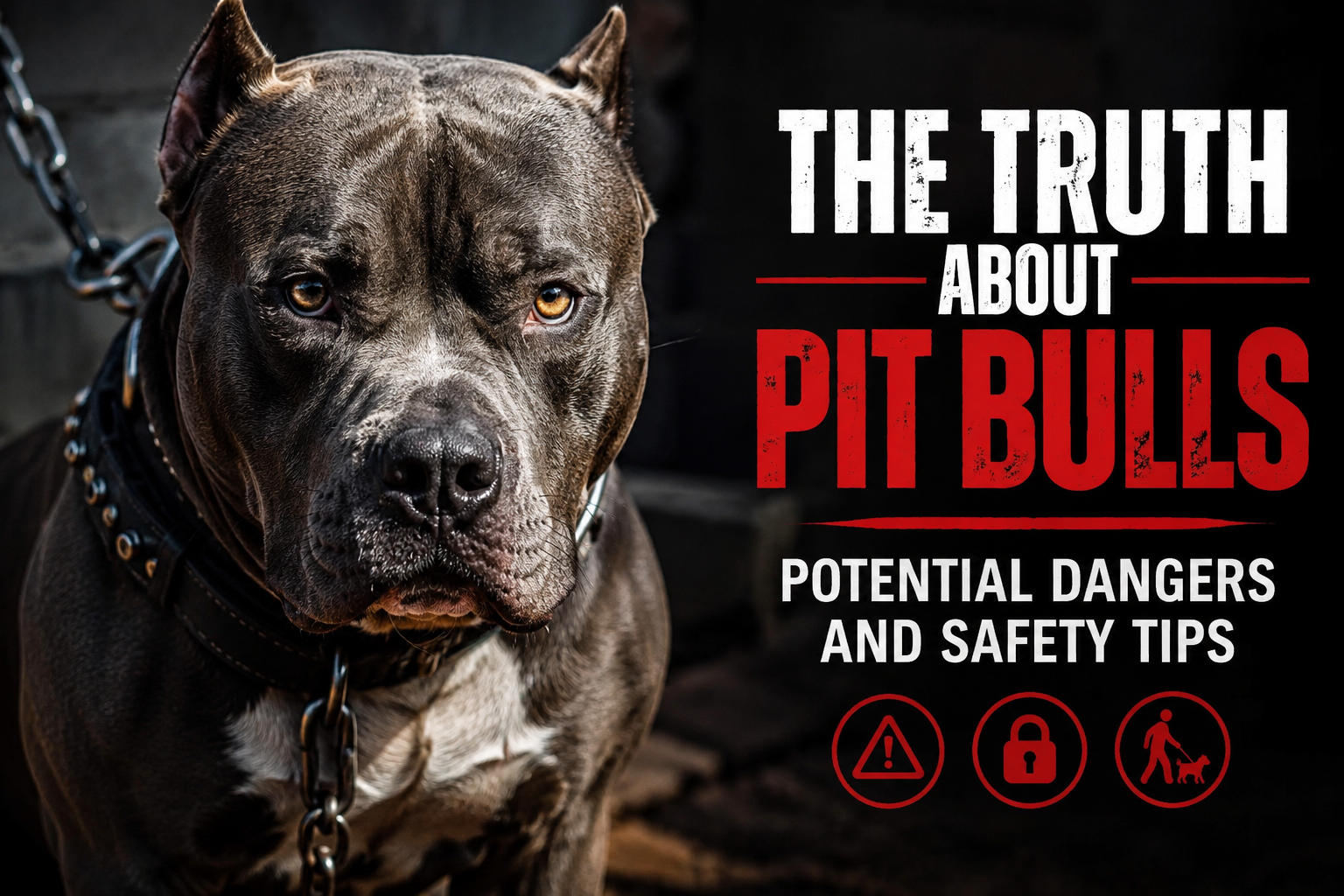
Pit Bulls are among the most talked-about dog breeds in the world. Admired by many for their strength, loyalty, and intelligence, they are also often associated with concerns about safety and aggression. The truth about Pit Bulls is more complex than the stereotypes suggest. While many Pit Bulls are loving family pets, their powerful physical characteristics and strong instincts mean that responsible ownership is essential.
This article explores the potential dangers associated with Pit Bulls and provides important safety tips for owners and families.
What Makes Pit Bulls Different?
The term “Pit Bull” generally refers to several breeds, including the American Pit Bull Terrier, American Staffordshire Terrier, and similar dogs. These breeds were originally developed for strength, endurance, and determination.
Pit Bulls are muscular dogs with powerful jaws and high energy levels. They are known for being confident, courageous, and eager to please their owners. However, these same traits can become problematic if the dog is poorly trained, neglected, or intentionally encouraged to behave aggressively.
Potential Dangers of Pit Bulls
1. Strong Bite Force and Physical Power
One of the biggest concerns about Pit Bulls is their physical strength. Even a friendly Pit Bull can accidentally cause injury during rough play due to its muscular build.
If a Pit Bull becomes aggressive, the consequences can be more serious than with smaller breeds because of its size and power. This is why proper training and supervision are so important.
2. Poor Socialization Can Lead to Problems
Like all dogs, Pit Bulls require early socialization. Puppies that are not exposed to different people, animals, and environments may become fearful or reactive later in life.
A poorly socialized Pit Bull may:
- Become suspicious of strangers
- Show aggression toward other dogs
- React unpredictably in stressful situations
- Develop territorial behavior
Early positive experiences help reduce these risks significantly.
3. High Energy Levels
Pit Bulls are energetic dogs that need regular exercise and mental stimulation. Without enough activity, they can become bored and destructive.
Common problems caused by lack of exercise include:
- Excessive barking
- Chewing furniture
- Digging holes
- Hyperactive behavior
- Difficulty following commands
Daily walks, play sessions, and training activities are essential for keeping a Pit Bull balanced and happy.
4. Inexperienced Ownership
Many behavioral issues arise when owners underestimate the responsibility of caring for a powerful breed.
A Pit Bull requires:
- Consistent training
- Firm but positive leadership
- Proper socialization
- Regular exercise
- Ongoing supervision
Owners who fail to provide these necessities may unintentionally create behavioral problems.
Common Myths About Pit Bulls
Myth 1: All Pit Bulls Are Aggressive
This is false. Aggression is influenced by genetics, training, environment, and treatment. Many Pit Bulls are affectionate, gentle, and excellent companions.
Myth 2: Pit Bulls Cannot Be Trusted Around Families
Many Pit Bulls live successfully with families and children. However, like any dog, interactions between dogs and children should always be supervised.
Myth 3: Pit Bulls Are Naturally Dangerous
No dog is born dangerous. Poor breeding, abuse, neglect, and irresponsible ownership often play a larger role in aggressive behavior than breed alone.
Essential Safety Tips for Pit Bull Owners
Start Training Early
Training should begin as soon as the puppy arrives home. Basic commands such as:
- Sit
- Stay
- Come
- Leave it
- Heel
help establish control and communication between owner and dog.
Positive reinforcement methods are generally the most effective.
Prioritize Socialization
Introduce your Pit Bull to:
- Different people
- Various environments
- Friendly dogs
- New sounds and experiences
The more positive experiences a dog has during its early development, the more confident and stable it is likely to become.
Exercise Every Day
Pit Bulls need both physical and mental stimulation. Daily activities may include:
- Long walks
- Running
- Fetch
- Agility training
- Puzzle toys
A tired dog is usually a better-behaved dog.
Use Secure Containment
Because of their strength, Pit Bulls should be kept in secure environments.
Safety measures include:
- Strong fencing
- Secure gates
- Proper leashes
- Durable collars or harnesses
Never allow a dog to roam freely in public areas.
Supervise Interactions
Always monitor interactions between your Pit Bull and:
- Children
- Strangers
- Other pets
Even well-trained dogs can react unexpectedly under stress.
Learn Canine Body Language
Understanding warning signs can help prevent incidents.
Watch for:
- Stiff body posture
- Growling
- Raised fur
- Intense staring
- Lip curling
Recognizing these signals early allows owners to intervene before a situation escalates.
Is a Pit Bull Right for You?
A Pit Bull can be a loyal and loving companion when raised responsibly. However, this breed is not suitable for everyone.
Potential owners should ask themselves:
- Do I have time for daily exercise?
- Am I willing to commit to training?
- Can I provide consistent leadership?
- Do I understand responsible dog ownership?
If the answer is yes, a Pit Bull can become a devoted family member. If not, another breed may be a better fit.
Conclusion
Pit Bulls are powerful, intelligent, and energetic dogs that require responsible ownership. While they are often associated with danger, the reality is that proper training, socialization, supervision, and care play a major role in shaping behavior. Understanding the potential risks and taking appropriate precautions can help owners create a safe and positive environment for both their dogs and the people around them. A well-trained and well-cared-for Pit Bull is far more likely to be a loyal companion than a danger to society.