The Manchineel Tree (Hippomane mancinella) is widely recognized as one of the most dangerous trees on Earth. Found in tropical regions of the Caribbean, Central America, northern South America, and parts of Florida, this remarkable yet deadly tree has earned a fearsome reputation due to its highly toxic sap, poisonous fruit, and dangerous interactions with humans. While many plants possess defensive mechanisms, the Manchineel Tree stands apart because nearly every part of it contains potent toxins capable of causing severe injuries.
In this article, we will explore what makes the Manchineel Tree so dangerous, where it grows, how it affects humans, and why it remains one of nature’s most fascinating yet hazardous organisms.
What Is the Manchineel Tree?
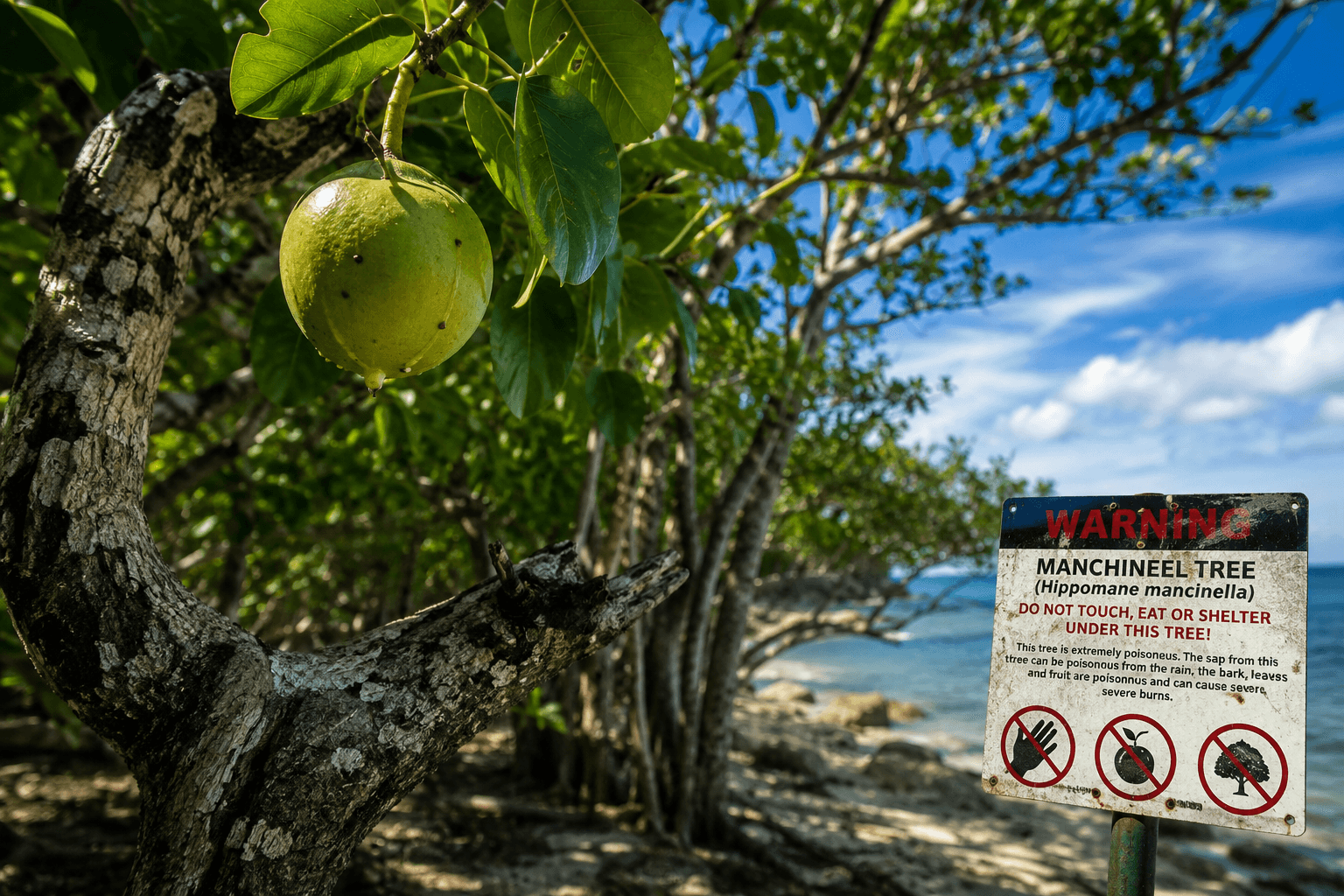
The Manchineel Tree belongs to the spurge family, scientifically known as Euphorbiaceae. It typically grows along coastal beaches, mangrove swamps, and tropical shorelines. The tree can reach heights of up to 15 meters (50 feet) and is easily recognized by its glossy green leaves and small greenish-yellow fruits that resemble apples.
Its scientific name, Hippomane mancinella, roughly translates to “horse madness,” reflecting the dangerous nature of the tree that has been known for centuries. Indigenous peoples and early explorers quickly learned to avoid it due to its toxic properties.
Why Is the Manchineel Tree So Dangerous?
The primary reason the Manchineel Tree is considered the world’s deadliest tree is that virtually every part of it contains toxic compounds.
Toxic Sap
The tree produces a milky white sap rich in powerful toxins. Even brief skin contact can cause:
- Severe chemical burns
- Blistering
- Intense irritation
- Painful skin inflammation
Rainwater dripping from the leaves can carry traces of this sap, meaning standing beneath the tree during a rainstorm can result in skin injuries without directly touching the tree.
If the sap enters the eyes, it may cause temporary blindness, severe inflammation, and extreme pain. Historical records describe explorers suffering eye injuries after accidentally coming into contact with the tree’s sap.
Poisonous Fruit
The fruit of the Manchineel Tree looks deceptively harmless. Often compared to a small green apple, it has even been nicknamed the “little apple of death.”
People who bite into the fruit typically experience:
- Intense burning in the mouth
- Swelling of the throat
- Difficulty swallowing
- Severe gastrointestinal distress
- Stomach pain
- Vomiting
Although fatalities are rare in modern times due to increased awareness, consuming the fruit can result in serious medical emergencies.
The Dangerous Effects of Burning Manchineel Wood
Many people assume avoiding the fruit and sap is enough, but the dangers extend even further.
Burning Manchineel Tree wood can release toxic particles into the air. Smoke from the tree may irritate the eyes, skin, and respiratory system. Exposure to these airborne toxins can cause:
- Eye inflammation
- Breathing difficulties
- Coughing
- Skin irritation
For this reason, local authorities in areas where the tree grows strongly discourage burning its wood.
Where Does the Manchineel Tree Grow?
The Manchineel Tree naturally occurs in tropical and subtropical coastal environments. It is commonly found in:
- The Caribbean Islands
- Florida Keys
- Bahamas
- Mexico
- Belize
- Costa Rica
- Panama
- Colombia
- Venezuela
The tree thrives in sandy coastal soils and serves an important ecological role by helping stabilize beaches and preventing erosion.
Despite its dangerous nature, it contributes significantly to coastal ecosystem health and biodiversity.
Historical Encounters With the Manchineel Tree
The deadly reputation of the Manchineel Tree dates back centuries. Indigenous communities understood its toxic properties long before European explorers arrived.
Historical accounts suggest that some indigenous groups used the tree’s poisonous sap on arrow tips to enhance their effectiveness during hunting and warfare.
Spanish explorers who encountered the tree often reported severe injuries after accidental exposure. These early experiences helped establish the tree’s legendary status as one of the most hazardous plants in the world.
Over time, stories about the Manchineel Tree spread throughout the Caribbean, where local populations learned to recognize and avoid it.
How Is the Manchineel Tree Identified?
Identifying a Manchineel Tree can help prevent accidental exposure.
Common characteristics include:
- Smooth grayish bark
- Shiny oval-shaped leaves
- Small green fruits resembling apples
- Coastal habitat near beaches and mangroves
In many tourist areas, authorities place warning signs or paint red bands around the trunk to alert visitors to the tree’s toxic nature.
Travelers should never touch unfamiliar trees or consume wild fruits in tropical regions without proper identification.
Ecological Importance of the Manchineel Tree
Although the Manchineel Tree is dangerous to humans, it remains an important part of coastal ecosystems.
Its root systems help:
- Stabilize shorelines
- Reduce coastal erosion
- Protect beaches from storm damage
- Support wildlife habitats
Certain animals appear to tolerate the tree’s toxins and may feed on its fruits without suffering harmful effects.
This demonstrates the complex relationships that exist between plants and wildlife in tropical ecosystems.
Safety Tips Around the Manchineel Tree
If you encounter a Manchineel Tree, follow these safety guidelines:
- Do not touch the bark, leaves, or fruit.
- Avoid standing beneath the tree during rain.
- Never burn its wood.
- Keep children away from the tree.
- Observe warning signs in coastal areas.
- Seek medical attention if exposed to sap or fruit.
Awareness and caution are the best ways to avoid injury.
Fascinating Facts About the Manchineel Tree
Here are some interesting facts about the Manchineel Tree:
- It is listed in various references as one of the most dangerous trees in the world.
- Its fruit resembles a harmless apple despite being highly toxic.
- Rainwater can carry toxins from the leaves onto people below.
- Indigenous peoples historically used its toxins on weapons.
- The tree helps protect coastlines from erosion.
- It belongs to the same plant family as poinsettias and castor plants.
- Its scientific name is Hippomane mancinella.
These facts highlight the unique combination of beauty, ecological importance, and danger associated with the species.
Conclusion
The Manchineel Tree is a remarkable example of nature’s ability to combine beauty with powerful defense mechanisms. Its toxic sap, poisonous fruit, and hazardous smoke have earned it a reputation as the world’s deadliest tree. Yet despite these dangers, it plays a crucial role in protecting tropical coastlines and supporting local ecosystems.
Understanding the risks associated with the Manchineel Tree allows people to appreciate its ecological value while remaining safe. Whether you are a traveler exploring Caribbean beaches or simply interested in unusual plants, the Manchineel Tree remains one of the most fascinating and infamous species in the natural world.