
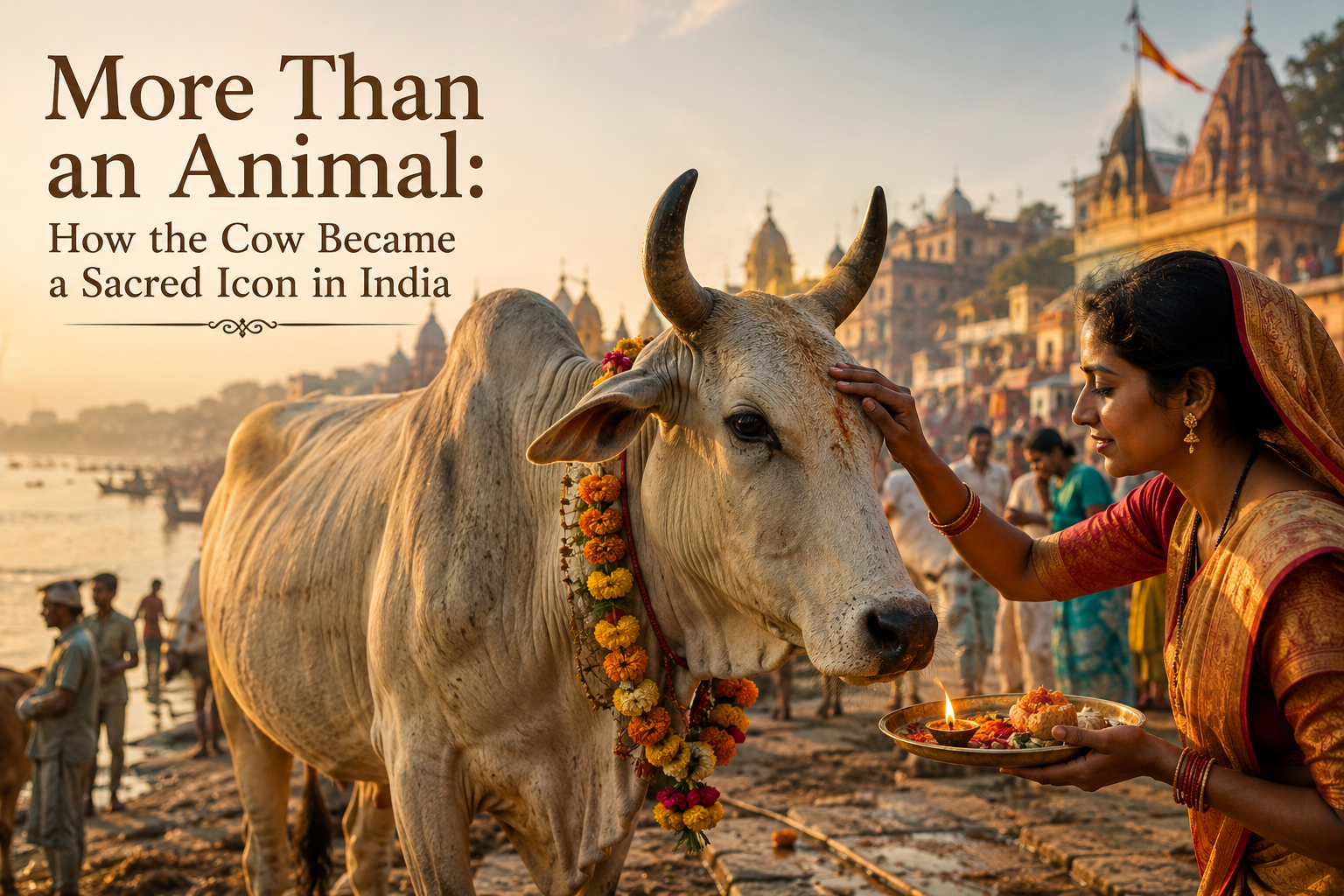
The Sacred Cow in India is one of the most recognizable symbols of Indian culture and Hindu spirituality. For centuries, cows have occupied a unique position in Indian society, admired not only for their economic value but also for their religious significance. To many people outside India, the respect shown toward cows may seem unusual or difficult to understand. However, the story behind this tradition is deeply rooted in history, philosophy, agriculture, and faith.
The sacred status of the cow is not based on a single belief. Instead, it is the result of thousands of years of cultural development, religious teachings, and practical realities that shaped Indian civilization. Today, the cow continues to represent compassion, generosity, life, and prosperity for millions of people.
Understanding why the cow became sacred offers fascinating insights into India’s rich heritage and the values that continue to influence one of the world’s oldest living cultures.
The Historical Importance of Cows in Ancient India
Long before modern technology transformed agriculture, cows played an essential role in everyday life. Ancient Indian communities depended heavily on cattle for survival.
Cows provided:
- Milk and dairy products
- Natural fertilizer for crops
- Fuel through dried cow dung
- Assistance in farming through oxen
- Economic stability for families
In agricultural societies, owning cattle often meant wealth and security. A family with healthy cows had access to food, farming support, and valuable resources. Because cows contributed so much to human survival without requiring slaughter, they naturally earned respect and gratitude.
Over time, this practical importance evolved into cultural and spiritual reverence.
The Cow in Hindu Scriptures
The sacred status of the cow is strongly connected to Hindu religious texts. Ancient scriptures frequently describe cows as symbols of abundance and divine blessings.
In the Vedas, among the oldest religious writings in the world, cows are praised for their ability to nourish society. They are often associated with prosperity, wealth, and kindness.
Many Hindu traditions refer to the cow as “Gau Mata,” meaning “Mother Cow.” Just as a mother nourishes her children, the cow provides milk and sustenance without expecting anything in return.
The concept of the cow as a mother figure helped strengthen emotional and spiritual connections between people and cattle.
The Principle of Ahimsa
One of the most important concepts in Hindu philosophy is Ahimsa, which means non-violence toward all living beings.
Ahimsa teaches that life is sacred and that unnecessary harm should be avoided whenever possible. This principle influences how many Hindus view animals, especially cows.
Because cows provide valuable resources throughout their lives without requiring death, protecting them became consistent with the philosophy of compassion and non-violence.
The influence of Ahimsa extends beyond Hinduism and can also be found in religions such as:
- Buddhism
- Jainism
- Sikhism
These traditions emphasize respect for living creatures and have contributed to India’s broader culture of animal protection.
Why the Cow Is Seen as a Symbol of Motherhood
The idea of the cow as a maternal figure is central to understanding its sacred status.
Milk has long been considered a life-giving substance. In traditional Indian households, milk is used for:
- Daily nutrition
- Religious rituals
- Festivals
- Ceremonies
- Sacred offerings
Since cows provide nourishment to humans much like a mother provides nourishment to her children, they became associated with selfless giving and unconditional care.
This symbolism transformed the cow from a valuable farm animal into a revered cultural icon.
Lord Krishna and the Sacred Cow
The relationship between cows and Hindu spirituality became even stronger through the stories of Krishna, one of Hinduism’s most beloved deities.
According to Hindu tradition, Krishna spent much of his youth as a cowherd. Many artistic depictions show him surrounded by cows, playing his flute in peaceful rural landscapes.
Krishna’s close relationship with cattle reinforced their sacred image. His teachings and stories helped elevate the cow as a symbol of harmony, innocence, and divine love.
Even today, many festivals celebrate Krishna’s connection with cows and pastoral life.
The Cow’s Role in Indian Agriculture
For thousands of years, India’s economy was largely agricultural. Before tractors and machinery became common, oxen were essential for farming activities.
Farmers relied on cattle for:
- Plowing fields
- Transporting goods
- Irrigation support
- Producing manure for crops
Cow dung also served as an environmentally friendly fertilizer that improved soil quality. In many rural communities, dried cow dung was used as cooking fuel.
These contributions made cattle indispensable to village life. Protecting cows helped ensure food security and economic stability for entire communities.
Religious Rituals and Ceremonies
Cows continue to play an important role in many Hindu rituals.
During various festivals and ceremonies:
- Cows may be decorated with flowers.
- Their horns may be painted.
- Special prayers may be offered.
- Families may seek blessings by feeding cows.
In some regions, festivals specifically honor cattle for their contribution to society and agriculture.
These celebrations highlight the enduring connection between spirituality and gratitude toward animals.
The Cow as a Symbol of Prosperity
Throughout Indian history, wealth was often measured by the number of cattle a family owned.
As a result, cows became associated with:
- Abundance
- Prosperity
- Fertility
- Success
- Good fortune
Ancient literature frequently describes prosperous kingdoms as having large and healthy herds of cattle.
Even today, cows remain powerful cultural symbols representing stability and blessings.
Cultural Significance Beyond Religion
Although the sacred cow is strongly linked to Hinduism, its importance extends beyond religious beliefs.
For many Indians, respect for cows reflects broader cultural values such as:
- Gratitude
- Compassion
- Harmony with nature
- Responsibility toward living creatures
People who may not actively practice religious rituals can still appreciate the cow’s historical and cultural significance.
This combination of religion, tradition, and cultural identity explains why the cow continues to occupy a special place in Indian society.
Common Misconceptions About Sacred Cows
Many people outside India mistakenly believe that Hindus literally worship cows as gods.
In reality, the situation is more nuanced.
Most Hindus do not consider cows to be gods themselves. Instead, cows are respected and honored because they symbolize important spiritual values.
The distinction is important:
- Worship is directed toward divine beings.
- Respect and reverence are shown toward cows.
The cow acts as a sacred symbol rather than an object of worship in the way many outsiders imagine.
Understanding this difference helps avoid misunderstandings about Hindu traditions.
Cow Protection in Modern India
The sacred status of cows continues to influence modern Indian society.
Many communities support:
- Cow shelters
- Animal welfare organizations
- Rescue programs
- Veterinary care initiatives
Various regions also have laws related to cattle protection, reflecting the cultural and religious importance of cows.
While opinions about these policies may differ, they demonstrate how deeply rooted the cow’s significance remains in contemporary India.
Environmental Benefits of Traditional Cattle Practices
In recent years, discussions about sustainable agriculture have renewed interest in traditional cattle-based farming methods.
Supporters argue that cattle can contribute to:
- Organic farming
- Natural fertilizer production
- Reduced chemical dependency
- Sustainable rural economies
Although modern environmental debates are complex, the traditional relationship between Indian farmers and cattle continues to offer valuable lessons about resource management and ecological balance.
The Sacred Cow in Art and Literature
Indian art has celebrated cows for centuries.
They appear in:
- Temple carvings
- Paintings
- Poetry
- Religious manuscripts
- Folk stories
Artists often portray cows as peaceful and nurturing creatures, reinforcing their association with compassion and abundance.
These artistic representations have helped preserve the cow’s symbolic importance across generations.
Why the Tradition Endures Today
Despite rapid modernization, the sacred cow remains an influential symbol throughout India.
Several factors explain its continued importance:
- Deep religious roots.
- Strong cultural traditions.
- Historical agricultural value.
- Symbolism of compassion and generosity.
- Connection to national heritage.
As India evolves, these traditions continue to coexist with modern life, demonstrating the enduring power of cultural identity.
Conclusion
The story of the Sacred Cow in India is far more complex than many people realize. The cow’s revered status developed through centuries of religious teachings, agricultural necessity, cultural traditions, and philosophical values centered on compassion and gratitude.
Rather than being respected for a single reason, the cow represents a combination of motherhood, generosity, prosperity, non-violence, and spiritual harmony. Its role in Indian civilization has shaped customs, rituals, and beliefs that continue to influence millions of people today.
By understanding the historical and cultural foundations of this tradition, we gain a deeper appreciation for one of the world’s most fascinating and enduring symbols. The sacred cow is more than an animal—it is a living reflection of India’s rich spiritual heritage, agricultural history, and enduring respect for life.