Intermittent Fasting has become one of the most popular health and weight loss trends worldwide. Unlike traditional diets that focus on what you eat, Intermittent Fasting focuses on when you eat. Millions of people have adopted this eating pattern to lose weight, improve their health, and simplify their daily routines. But what exactly is Intermittent Fasting, and is it right for everyone?
What Is Intermittent Fasting?
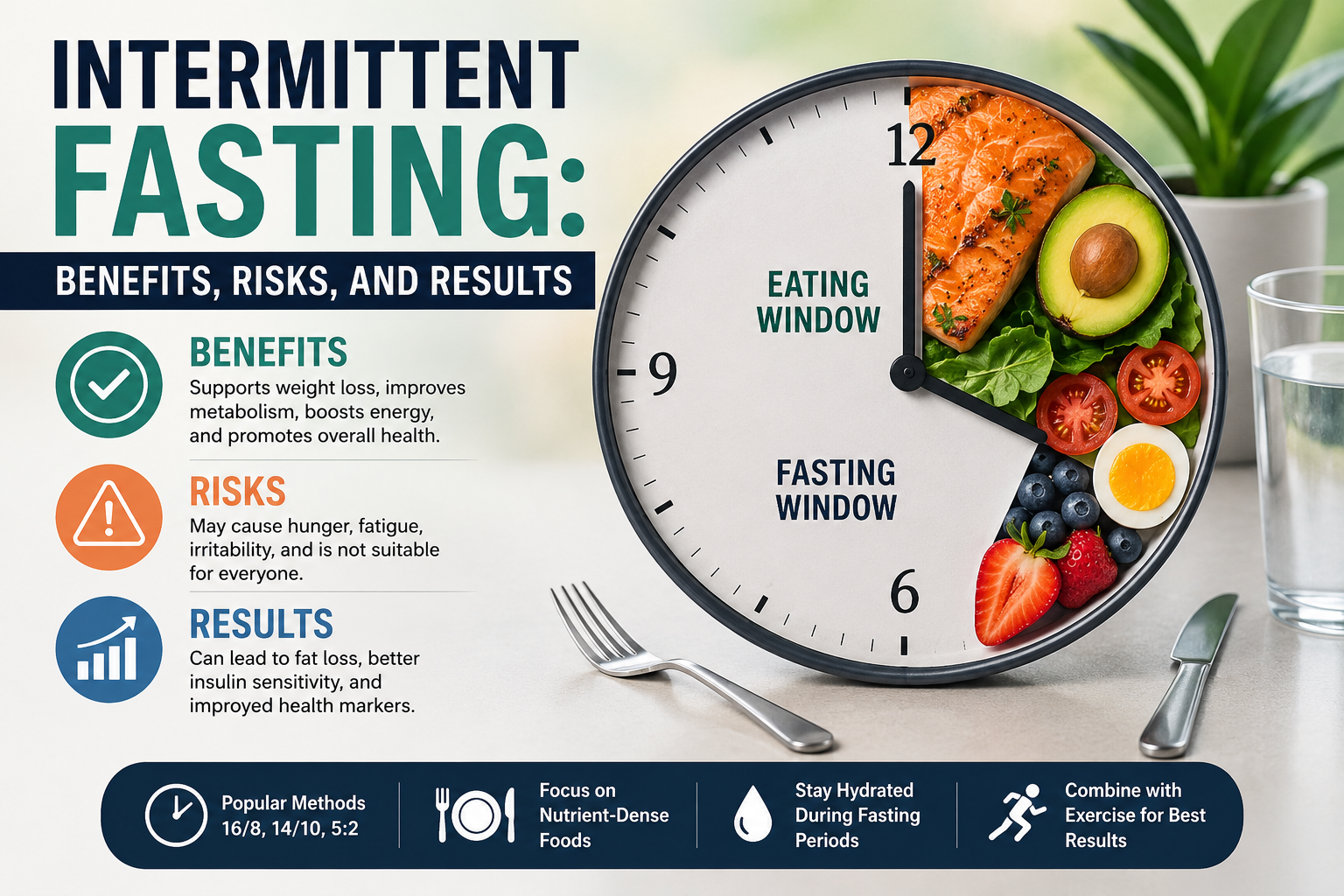
Intermittent Fasting is an eating pattern that alternates between periods of eating and fasting. Instead of restricting specific foods, it limits the time window during which you consume calories. Popular methods include the 16/8 method, where individuals fast for 16 hours and eat during an 8-hour window, and the 5:2 method, which involves eating normally for five days and reducing calorie intake on two days each week.
Benefits of Intermittent Fasting
One of the main reasons people choose Intermittent Fasting is its potential to support weight loss. By reducing the eating window, many individuals naturally consume fewer calories throughout the day.
Additional benefits may include:
- Improved insulin sensitivity
- Better blood sugar control
- Increased fat burning
- Enhanced mental clarity and focus
- Improved metabolic health
- Simpler meal planning and reduced snacking
Some studies also suggest that Intermittent Fasting may support heart health by helping improve cholesterol levels and blood pressure.
Risks and Potential Side Effects
Although Intermittent Fasting can offer several health benefits, it is not suitable for everyone. During the adjustment period, some people may experience:
- Hunger and cravings
- Fatigue
- Headaches
- Irritability
- Difficulty concentrating
People with certain medical conditions, pregnant women, and individuals with a history of eating disorders should consult a healthcare professional before starting Intermittent Fasting.
It is also important to avoid overeating during eating windows, as this can reduce the effectiveness of the fasting plan.
What Results Can You Expect?
Results from Intermittent Fasting vary depending on age, lifestyle, diet quality, and physical activity levels. Some individuals notice increased energy and reduced appetite within the first few weeks.
Weight loss results typically become noticeable after several weeks of consistent practice. Many people report losing body fat while maintaining muscle mass when Intermittent Fasting is combined with a balanced diet and regular exercise.
Long-term success depends on maintaining healthy eating habits rather than relying solely on fasting periods.
Tips for Success
To maximize the benefits of Intermittent Fasting, consider the following tips:
- Stay hydrated throughout the day
- Focus on nutrient-dense foods
- Include lean protein in your meals
- Get enough sleep each night
- Exercise regularly
- Avoid excessive processed foods and sugary drinks
Consistency is often the key to achieving sustainable results.
Conclusion
Intermittent Fasting is a flexible eating approach that may help with weight loss, metabolic health, and overall well-being. While it offers several potential benefits, it is important to understand the risks and follow a balanced lifestyle. When practiced correctly, Intermittent Fasting can be an effective tool for achieving long-term health and fitness goals.