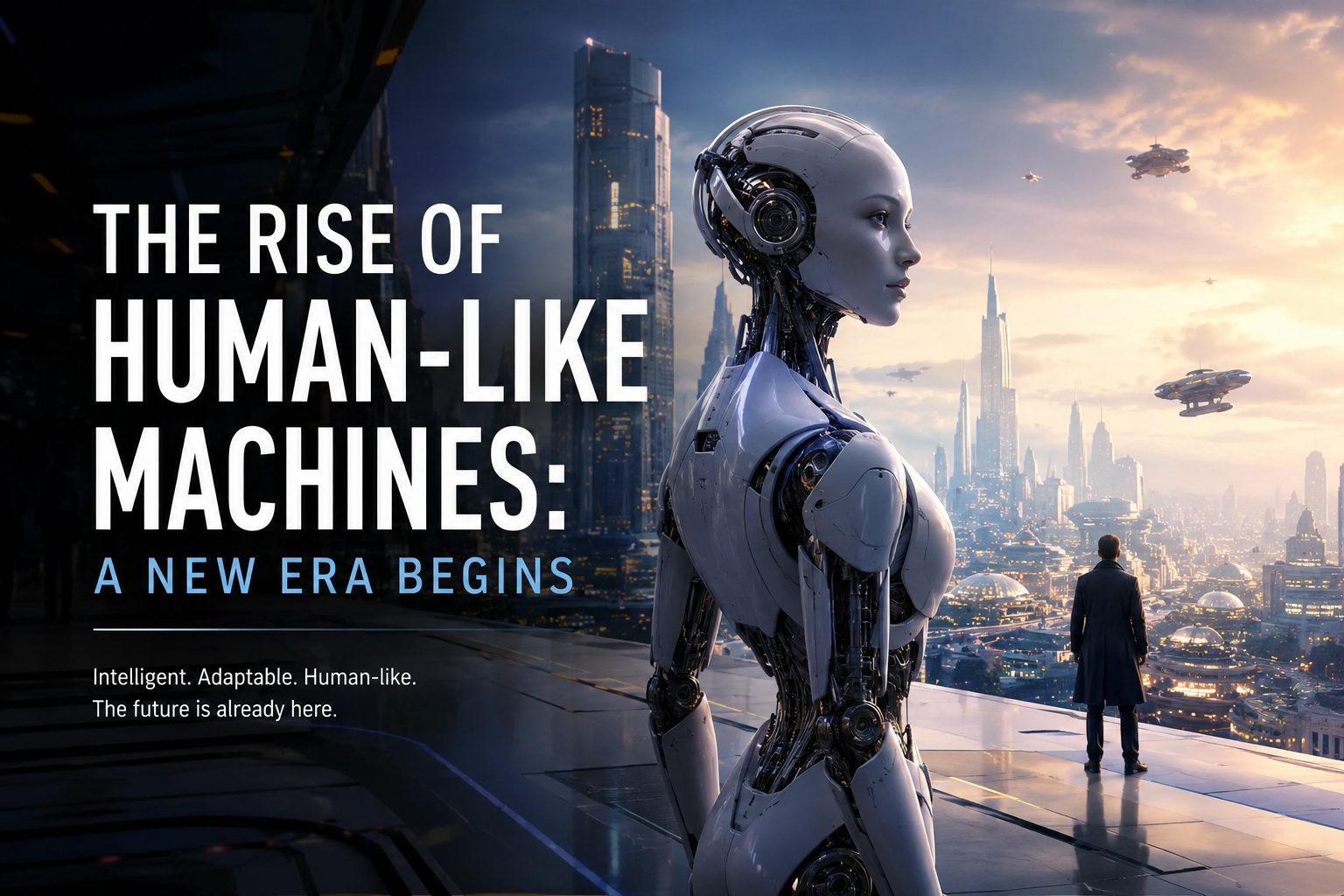
For decades, humanoid robots existed only in science fiction. Movies and books imagined a future where machines could walk, talk, think, and work alongside humans. Today, that vision is rapidly becoming reality. Advances in artificial intelligence, robotics, sensors, and computing power have brought human-like machines closer to everyday life than ever before. As technology continues to evolve, humanoid robots are beginning to transform industries, workplaces, and even our homes.
What Are Humanoid Robots?
Humanoid robots are machines designed to resemble and mimic human behavior. Unlike traditional industrial robots that perform repetitive tasks in factories, humanoid robots are built with human-like features such as arms, legs, hands, and sometimes even facial expressions. Their design allows them to interact naturally with environments created for humans.
Modern humanoid robots can walk, recognize objects, understand speech, respond to commands, and perform complex tasks. Equipped with advanced AI systems, these machines can learn from experiences and improve their performance over time.
Why Humanoid Robots Are Advancing So Quickly
Several technological breakthroughs have accelerated the development of humanoid robots in recent years.
Artificial Intelligence
AI serves as the brain of humanoid robots. Machine learning algorithms enable robots to recognize patterns, understand language, make decisions, and adapt to new situations. The rise of powerful AI models has significantly improved robot intelligence and autonomy.
Advanced Sensors
Humanoid robots use cameras, microphones, lidar systems, and touch sensors to understand their surroundings. These sensors allow them to detect obstacles, identify objects, and interact safely with people.
Powerful Computing
Modern processors can handle enormous amounts of data in real time. This allows robots to process visual information, understand commands, and coordinate complex movements instantly.
Improved Batteries
Battery technology has become more efficient, allowing humanoid robots to operate for longer periods without frequent recharging.
Applications Across Multiple Industries
The impact of humanoid robots is already being felt across various sectors.
Manufacturing
Factories are increasingly using humanoid robots to perform tasks that require flexibility and precision. Unlike traditional robotic arms, humanoid robots can move through factory environments designed for human workers, making them highly adaptable.
Healthcare
In hospitals and healthcare facilities, robots assist with patient monitoring, medication delivery, and administrative tasks. Some advanced robots can even provide companionship for elderly patients, helping reduce loneliness and improve quality of life.
Retail and Customer Service
Many businesses are experimenting with humanoid robots as receptionists, customer service representatives, and information assistants. These robots can greet visitors, answer questions, and provide guidance in shopping centers, airports, and hotels.
Education
Schools and universities are beginning to use robots as teaching assistants. They can help explain lessons, assist students with special needs, and create interactive learning experiences.
Logistics and Warehousing
Humanoid robots are becoming valuable assets in warehouses, where they can lift packages, sort inventory, and transport goods efficiently.
The Rise of AI-Powered Companions
One of the most fascinating developments is the emergence of humanoid robots as personal assistants and companions. Future robots may help with household chores, manage schedules, provide reminders, and even offer emotional support through natural conversation.
While these robots cannot replace genuine human relationships, they may become useful tools for assisting elderly individuals, people with disabilities, and busy families.
Benefits of Human-Like Machines
The growing adoption of humanoid robots offers numerous advantages.
Increased Productivity
Robots can work continuously without fatigue, helping businesses improve efficiency and reduce operational costs.
Enhanced Safety
Dangerous jobs in industries such as mining, construction, and disaster response can be performed by robots, reducing risks for human workers.
Addressing Labor Shortages
Many countries face aging populations and labor shortages. Humanoid robots can help fill workforce gaps in healthcare, logistics, and manufacturing.
Improved Accessibility
Robots can assist individuals with physical limitations, helping them perform daily activities and maintain independence.
Challenges and Concerns
Despite their potential, humanoid robots also raise important questions.
Employment Impact
As robots become more capable, some jobs may be automated. Governments, businesses, and educational institutions must prepare workers for changing labor markets by promoting reskilling and lifelong learning.
Ethical Considerations
Developers must ensure robots operate responsibly and safely. Issues such as privacy, decision-making, and accountability require careful regulation.
Cost and Accessibility
Advanced humanoid robots remain expensive. Wider adoption will depend on reducing production costs while maintaining performance and reliability.
Security Risks
Connected robots may become targets for cyberattacks. Strong cybersecurity measures are essential to protect users and prevent misuse.
The Global Race for Humanoid Robotics Leadership
Countries around the world are investing heavily in robotics development. China, the United States, Japan, South Korea, and several European nations are competing to lead the next generation of intelligent machines.
Technology companies and startups are pouring billions of dollars into research and development. New breakthroughs are occurring almost every year, bringing humanoid robots closer to widespread adoption.
Many experts believe that the coming decade will see humanoid robots become as common as smartphones and personal computers are today.
What the Future May Look Like
Imagine waking up to a robot assistant that prepares breakfast, manages household tasks, and helps organize your day. In workplaces, robots could collaborate with human employees, handling repetitive or physically demanding tasks while people focus on creativity and problem-solving.
Hospitals may use robotic assistants to support medical staff. Schools could benefit from personalized robotic tutors. Emergency responders may deploy robots into hazardous environments where human lives would be at risk.
The possibilities continue to expand as technology advances.
Conclusion
The rise of human-like machines marks the beginning of a new technological era. Humanoid robots are no longer confined to science fiction; they are becoming practical tools capable of transforming industries and improving daily life. Powered by artificial intelligence, advanced sensors, and sophisticated engineering, these machines are poised to reshape how we work, learn, and interact with technology.
While challenges related to ethics, employment, and security remain, the potential benefits are enormous. As innovation continues, humanoid robots may become one of the most significant technological developments of the 21st century. The future is arriving faster than many expected, and human-like machines are leading the way into this exciting new era.